

Florida judicial foreclosures typically run through circuit court and, in routine uncontested cases, the timeframe from first missed payment to certificate of title commonly takes about 12 to 18 months; contested or aggressively defended cases often take longer. The sale itself gets scheduled 20 to 35 days after final judgment, with a 10-day window to object before title transfers. Your most urgent move right now is contacting your servicer about loss mitigation, talking to a foreclosure attorney, or getting a cash offer on the table before a sale date locks in.
TL;DR:
- Most Florida foreclosures take about 12 to 18 months from missed payment to sale if uncontested, but heavily defended cases can extend beyond 24 months.
- A 20 to 35-day window follows the final judgment for the sale, with a 10-day objection period before the certificate of title issues to the winning bidder.
- Filing an answer within 20 days of service and acting early with loss mitigation or a quick sale significantly improves your chances to delay or stop a foreclosure.
- The key deadlines are governed by statutes and rules such as Fla. Stat. § 45.031 for sale scheduling and Fla. R. Civ. P. 1.140 for answer timing.
- Factors like court backlog, case complexity, contesting, and lender efficiency influence the case duration, with proactive homeowners gaining more options.
Table of Contents
- How Long Is the Foreclosure Timeline in Florida?
- What Statutes and Court Rules Actually Set These Deadlines?
- Which Factors Make a Florida Foreclosure Faster or Slower?
- What Are Your Options for Stopping or Delaying a Sale?
- Why Most Homeowners Lose Time They Didn’t Have to Lose
- How Sunshine State Buyers Can Help You Beat the Clock
- Where to Verify These Deadlines Yourself
- Sources
- FAQ
How Long Is the Foreclosure Timeline in Florida?
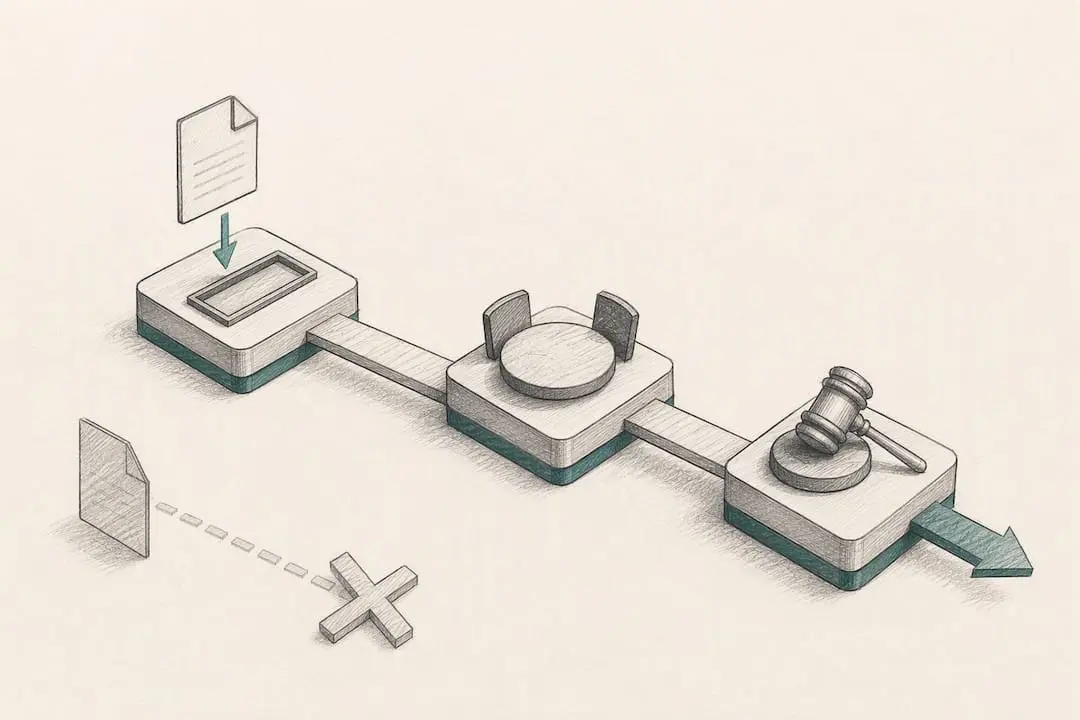
Florida is a judicial foreclosure state, which means your lender cannot simply take your house. Every case has to go through circuit court, and that court process is what creates the calendar you’re trying to understand. Here’s how the stages typically unfold, from the first missed mortgage payment to the day a new owner holds the certificate of title.
Missed payment and servicer contact. Federal servicing rules generally require your servicer to reach out and provide loss-mitigation information within about 36 to 45 days of a missed payment, and most servicers cannot legally start foreclosure until you’re more than 120 days delinquent.
Breach letter and acceleration. Your lender sends a formal notice of default, often called a breach or acceleration letter giving you a cure period commonly of 30 days to catch up before the loan is called due in full.
Complaint filed and lis pendens recorded. The lender files a lawsuit in circuit court and records a lis pendens, a public notice attached to your property’s title that alerts anyone doing a title search that foreclosure is pending.
Service of process and your 20-day answer window. Once you’re formally served, you have 20 days to file a response under Florida Rule of Civil Procedure 1.140. Missing this deadline is the single fastest way to lose your case by default.
Discovery, mediation, and summary judgment. Contested cases move into discovery and sometimes court-ordered mediation, a phase that commonly adds 3 to 9 months. Many cases end here through a summary judgment motion rather than a full trial.
Final judgment and sale. Once the court enters final judgment, Florida law sets the sale date between 20 and 35 days later. The clerk conducts the auction, and the winning bidder typically posts a 5% deposit that day, according to DefaultResearch’s overview of Florida foreclosure auctions.
Certificate of sale, objection period, certificate of title. After the auction, there’s a 10-day window to object to the sale. If nobody successfully objects, the clerk issues the certificate of title, and ownership officially transfers.
What Statutes and Court Rules Actually Set These Deadlines?
Every date in your foreclosure case traces back to a specific statute or rule, and knowing them lets you check whether the notices you’ve received are actually on schedule.
- Fla. Stat. § 45.031 governs the sale itself: the 20 to 35 day scheduling window, publication requirements, deposit rules, and the 10-day post-sale objection period before a certificate of title issues.
- Chapter 702 covers the broader foreclosure procedure, including order-to-show-cause hearings and, in certain uncontested cases, expedited final judgment within 90 days from the close of pleadings.
- Fla. R. Civ. P. 1.140 sets your 20-day answer deadline once you’re served.
- Federal Regulation X requires servicer contact and loss-mitigation notices generally within 36 to 45 days of default, and bars foreclosure filing before 120 days delinquent in most cases.
Statutory snapshot: A homeowner who is served on a Monday has until the following third Monday to file an answer. Miss it, and the court can enter a default judgment without ever hearing your side.
Which Factors Make a Florida Foreclosure Faster or Slower?
Four things drive how long your specific case takes, and understanding them helps you predict where you’ll land on the timeline.
- Court backlog. Circuit courts in high-volume counties move slower than courts with lighter dockets, and this alone can add months regardless of anything you do.
- Case complexity. Multiple liens, HOA disputes, or title defects require extra legal steps and extra time to resolve.
- Whether you contest the case. Filing an answer, requesting discovery, and attending mediation all add time, but they also add leverage.
- Lender and servicer efficiency. Some servicers move through paperwork quickly and have clean standing to foreclose; others get delayed by their own documentation gaps.
Based on these factors, routine uncontested cases often wrap up in roughly 12 to 18 months, routine contested cases run similarly at 12 to 18 months, and heavily defended or legally complex cases commonly stretch past 24 months.
Pro Tip: Your own responsiveness often matters more than how aggressive your lender is. A homeowner who files an answer, negotiates in mediation, and shows up to hearings usually gets more time and more options than one who ignores the mail.
What Are Your Options for Stopping or Delaying a Sale?
You have real choices at nearly every stage, and the earlier you act, the more of them stay open.
- Apply for loss mitigation. Ask your servicer about a loan modification or forbearance as soon as you miss a payment. You’ll need proof of income, a hardship letter, and recent bank statements.
- Use mediation and consider a short sale. Court-ordered mediation, when available, is often where loan modifications and short sales actually get worked out, according to foreclosure defense timeline research.
- File bankruptcy if it fits your situation. Chapter 7 typically pauses a sale for a few months through the automatic stay; Chapter 13 can delay it considerably longer while you catch up on payments through a repayment plan, though both carry credit and cost tradeoffs worth discussing with an attorney.
- Sell to a cash buyer. If you’re close to a sale date, don’t have the time or money for repairs, or you’re dealing with a rental property with tenants, selling directly for cash can close before the auction ever happens.
What to gather now, regardless of which path you choose:
- Your mortgage statement and loan number
- Any breach letters or court papers you’ve received
- Recent tax and homeowners insurance statements
- Government-issued ID and proof of ownership
Why Most Homeowners Lose Time They Didn’t Have to Lose
The biggest mistake isn’t falling behind on payments. It’s what happens after: letting breach letters and court summonses pile up unopened, or assuming there’s more time than the calendar actually allows. A missed 20-day answer deadline can end your case before you’ve made a single decision.
Acting early, whether that means answering the lawsuit, applying for loss mitigation, or lining up a fast sale, keeps every option on the table. Waiting closes them one by one. Verify your actual deadlines against the statutes, talk to a foreclosure attorney or housing counselor, and if a quick sale makes sense for your situation, talk to a buyer you trust before the court sets your date.
How Sunshine State Buyers Can Help You Beat the Clock
Some cash home buyers provide fast offers often within 24 hours, instead of leaving you guessing while your court date approaches. That speed matters when a sale is already scheduled and every week counts.
Cash home buyers purchase homes as-is, including houses needing repairs, rentals with tenants, or inherited properties that you don’t want to manage. Selling as-is to a cash buyer can avoid showings, agent commissions, and financing delays. Closings can often occur quickly, sometimes within one to two weeks, with sellers able to choose their closing date. Some companies hold high ratings with the Better Business Bureau and operate statewide, with experience assisting homeowners facing tight deadlines.
If your sale date is approaching or you need to explore options before the court moves forward, consider obtaining a no-obligation cash offer. Start by visiting the Stop Foreclosure Florida guide to see what a direct sale could look like for your specific timeline, and have your mortgage statement and any court paperwork ready when you call.
Where to Verify These Deadlines Yourself
- Fla. Stat. § 45.031 for sale timing and the objection period
- Chapter 702, Florida Statutes for foreclosure procedure
- CFPB foreclosure FAQ for servicer contact rules
- FloridaLawHelp for free local legal aid
This article is general information, not a substitute for advice from a qualified financial advisor. Consult a qualified financial professional about your own circumstances before acting on anything here.
Sources
- Chapter 45 § 45.031 — 2022 Florida Statutes
- Chapter 702 — 2025 Florida Statutes (Foreclosure of mortgages and statutory liens)
- Florida foreclosure laws & procedures | Nolo
- Consumer Financial Protection Bureau — How long will it take before I’ll face foreclosure? (FAQ)
- Florida Foreclosure Defense Timeline Calculator | The Fennec Lab
FAQ
What is the 120-day rule for foreclosure?
Federal servicing rules generally prohibit your mortgage servicer from starting foreclosure until you’re more than 120 days past due, giving you a window to pursue loss mitigation before legal proceedings begin.
How long can you go without paying your mortgage before foreclosure starts in Florida?
Most servicers wait until you’re past the 120-day mark before filing, though the breach letter and cure period notices typically start showing up much earlier, often around 36 to 45 days after your first missed payment.
How long after foreclosure do I have to move in Florida?
Once the clerk issues the certificate of title, the new owner can begin eviction proceedings, which commonly gives occupants a matter of weeks rather than months to vacate, depending on how quickly the new owner files.
Do I still owe money after a foreclosure in Florida?
Possibly. If the sale price doesn’t cover your full loan balance, the lender can pursue a deficiency judgment for the difference, though selling before the sale date, such as through a direct cash sale, avoids that risk entirely.
Recommended
- Stop Foreclosure Florida: Your Guide to Solutions
- Stop Foreclosure Miami: Cash Sale Benefits
- How It Works
- Miami Foreclosure Timeline and Your Options
This article was produced with AI assistance and reviewed for accuracy. It is provided for general information only and is not professional advice.

Leave a Reply