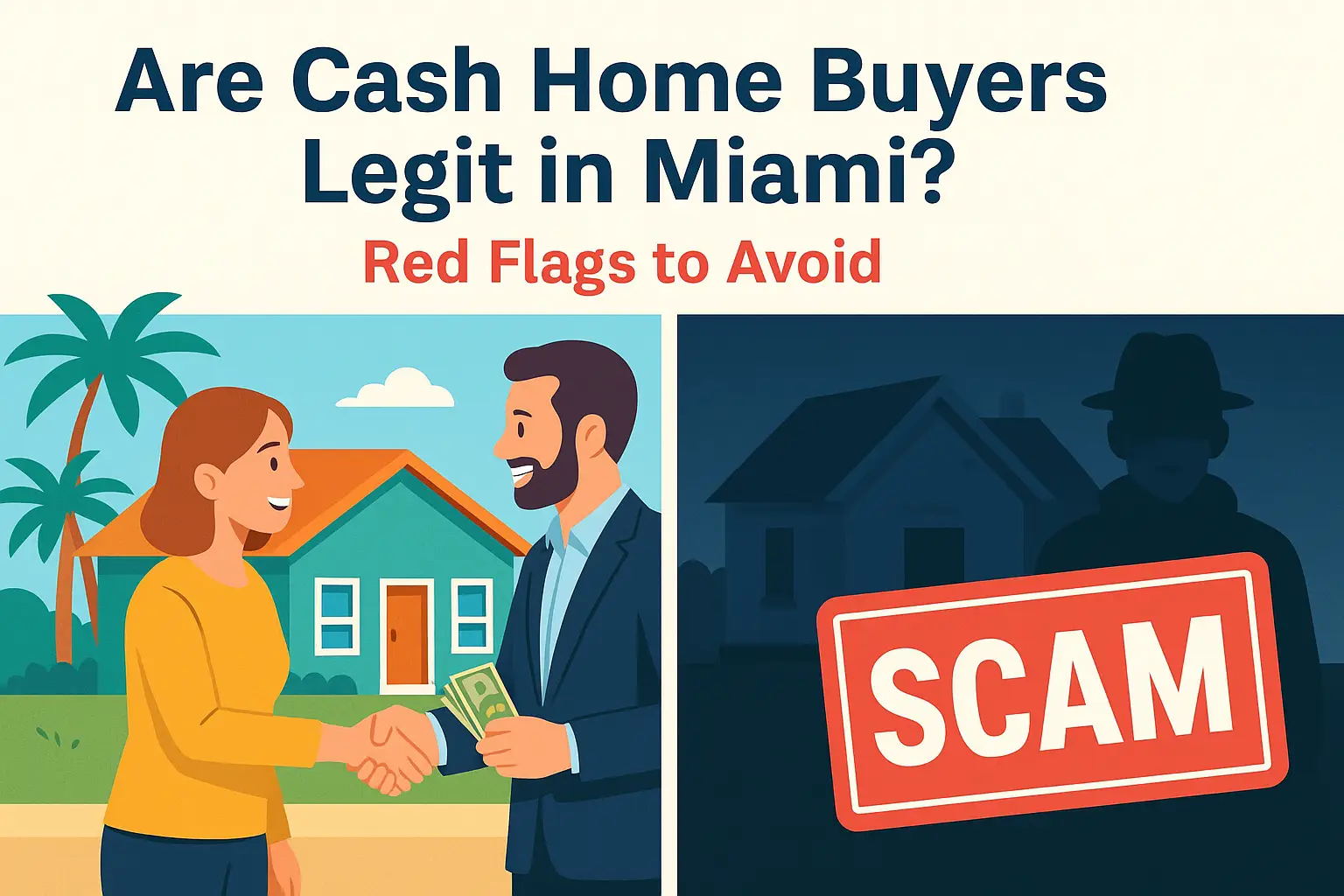
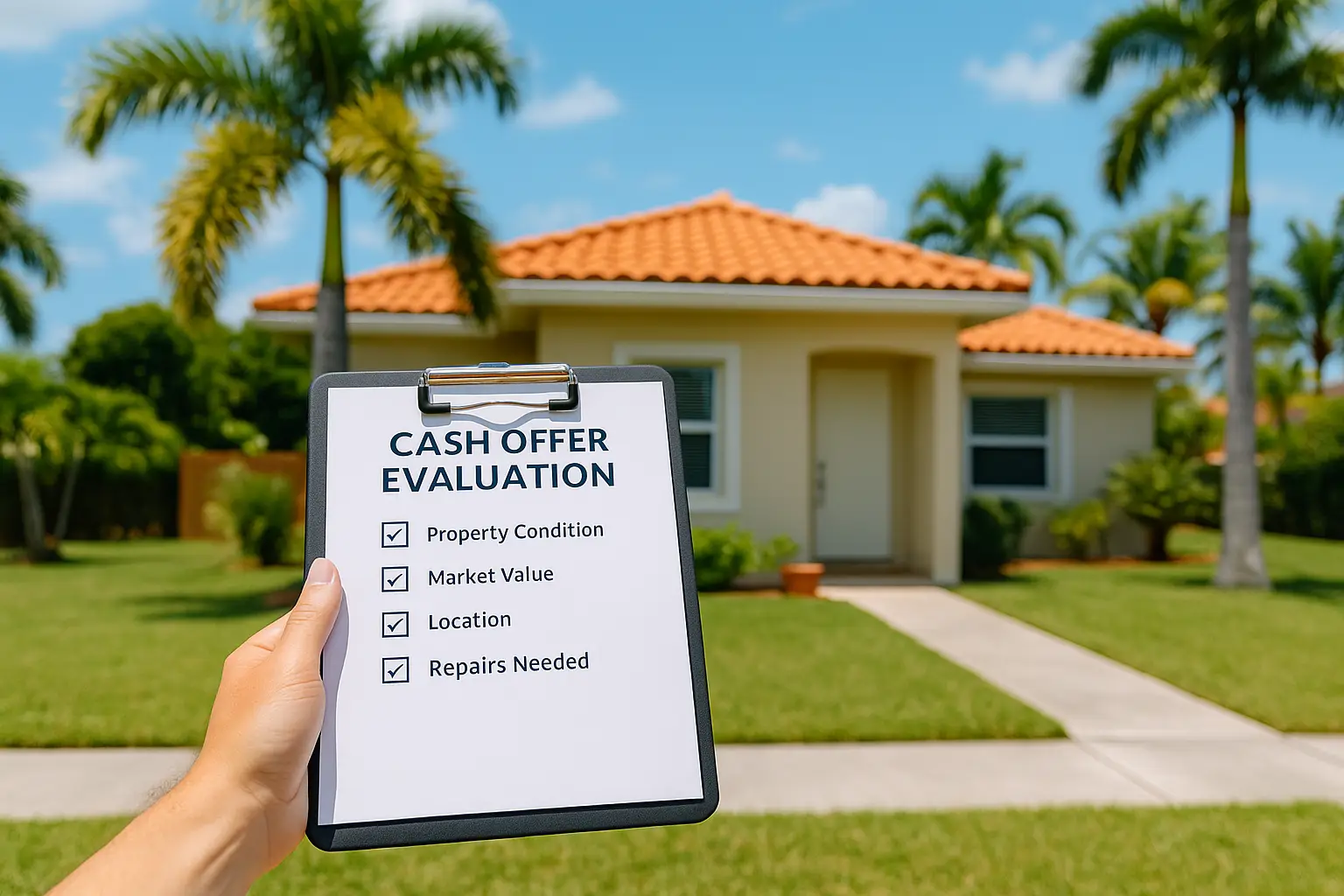
Category: Cash Offers & Home Value

Discover how Sunshine State Buyers calculates fair cash offers and what affects your property’s value in the Miami real estate market

  • 3 Checks to Spot Cash Offer Scams in Florida Before You Sign

    3 Checks to Spot Cash Offer Scams in Florida Before You Sign

    Cash offers can be completely legitimate in Florida, but you need to protect yourself before signing anything. Three checks matter most: verifiable proof of funds, zero upfront fees, and closing through a licensed title company. If anything feels rushed or a buyer resists these basics, pause the deal and verify everything before you put pen to paper.


    TL;DR:

    • Proven proof-of-funds must be a bank letter on official letterhead confirmed directly with the bank, not just a screenshot or PDF.
    • Always verify the buyer’s business registration on Sunbiz and check their licensing and disciplinary records through the DBPR before proceeding.
    • Reputable cash buyers typically offer within 24 hours, close through licensed title companies, and charge no upfront fees, ensuring transparency.
    • Avoid wiring money based on email instructions; confirm all wiring instructions directly with the title company using a verified phone number.
    • Recognize common scams like forged documents, overpayment schemes, deed fraud, and impersonation, which rely on skipping verification steps.

    Sunshine State Buyers
    Sell Your Florida Home With Clarity
    Sunshine State Buyers provides transparent, no-pressure cash offers for Florida homes, with as-is sales and flexible closing dates.

    Explore your selling options

    Table of Contents

    What Are the Warning Signs of Cash Offer Scams in Florida?

    Most cash offer scams in Florida share a handful of tells. Once you know what to look for, spotting a fraud gets a lot easier.

    Watch for these red flags:

    • Unverifiable proof of funds: A screenshot or PDF instead of an actual bank letter you can confirm by phone.
    • Forged bank letterhead: Letters that look official but come from an email address, not the bank itself.
    • Upfront fee requests: Any ask for “processing,” “application,” or “administrative” fees before closing.
    • Pressure to close fast, off the books: A push to skip the title company or sign a quit-claim deed “to speed things up.”
    • Offers that don’t add up: A number far below the going rate for cash sales, or one so high it seems designed to hook you.
    • No paper trail on the buyer: A free email address, no verifiable business registration, and no references who will talk to you.

    Legitimate investors in Florida typically offer somewhere around 70% to 85% of market value, reflecting the discount for skipping repairs and a traditional sale process. The Florida Attorney General’s consumer protection resources are worth checking for current scam alerts before you engage with any buyer. An offer significantly below market value, or one that seems too generous given the property’s condition, deserves a second look.

    Pro Tip: If a buyer refuses to let you call their bank directly to confirm a proof-of-funds letter, treat that refusal itself as a red flag. It costs a legitimate buyer nothing to say yes.

    How Do You Verify a Cash Buyer Before Signing?

    Verification takes maybe an hour of phone calls and searches. That hour can save you from losing tens of thousands of dollars or your home’s title.

    1. Get a dated proof-of-funds letter on bank letterhead, then call the bank using the number listed on its official website, not any number the buyer provides. Ask the bank to confirm the letter and the balance are real.
    2. Search Sunbiz for the buyer’s business registration. Florida’s business database shows whether the company is actually registered to do business in the state.
    3. Check DBPR license and complaint records if the buyer claims to be a licensed real estate professional. The Florida Department of Business and Professional Regulation tracks disciplinary history.
    4. Confirm the title company independently. Any legitimate cash sale closes through a licensed title company or escrow attorney. Look up the company yourself and call the number you find, not one the buyer texts you.
    5. Ask for references and check the Better Business Bureau. A buyer with a real track record will have online reviews and past sellers willing to vouch for them.
    6. Insist on independent attorney review before you sign a contract. A real estate attorney can spot assignment clauses or unusual terms buried in the fine print.
    7. Never wire money based on instructions sent by email or text. Call the title company directly, using a number you look up yourself, to confirm wiring instructions before sending a cent.

    Pro Tip: Save the phone number you use to verify the bank and title company. If something goes wrong later, that record shows you did your due diligence.

    This workflow mirrors what consumer protection officials recommend statewide, and it works because it removes the buyer from the verification loop entirely. You’re checking with the bank, not trusting what the buyer told you about the bank.

    What Are the Most Common Cash Offer Scams in Florida?

    Understanding how each scam actually works makes the verification steps above feel less like paperwork and more like common sense.

    • Bait-and-switch contracts. A buyer signs you at one price, then reduces it days before closing citing “inspection findings,” or assigns your contract to a third party for a fee without disclosing it upfront.
    • Wire fraud and overpayment schemes. A buyer sends a check for more than agreed and asks you to wire back the difference. The check later bounces, and you’re out the wired amount. The Florida Attorney General warns specifically against wiring money or refunding any “overpayment” until a bank confirms the original check has fully cleared.
    • Deed fraud and quit-claim tricks. Scammers use forged documents to record a fraudulent deed transfer, sometimes without the owner’s knowledge, particularly targeting absentee owners and inherited properties.
    • Foreclosure rescue scams. Someone charges upfront fees to “save” your home from foreclosure, then disappears once you’ve paid, leaving you no better off and out of pocket.
    • Fake buyer impersonation. Someone poses as a legitimate cash buyer using a forged proof-of-funds letter, banking on you not calling to check.

    Every one of these relies on skipping a verification step. That’s exactly why the checklist above exists.

    What Should You Do If a Cash Offer Scam Targets You?

    If something feels off, or you realize too late that you’ve been targeted, act fast and document everything.

    1. Stop all payments and communication with the suspected scammer immediately.
    2. Contact your title company or a real estate attorney the moment something seems wrong, even before closing.
    3. File a complaint with the Florida Attorney General’s office through My Florida Legal, which tracks real estate scam patterns statewide.
    4. Report licensed professionals to DBPR. The department can investigate and discipline licensed agents or brokers, though it generally cannot order restitution, so civil recovery usually requires an attorney.
    5. Report wire fraud to the FBI’s IC3 and to your bank the same day. Speed matters most with wire transfers.

    Beyond reacting to an active scam, a few preventive steps matter too:

    • Enroll in your county’s free property-fraud alert program (available in Miami-Dade, Broward, Palm Beach, Hillsborough, and Orange counties, among others) if you’re an absentee owner, since these programs flag suspicious recordings filed under your name.
    • Contact the county clerk’s office directly if you discover a fraudulent deed has already been recorded.
    • Talk to a Florida real estate attorney about quiet title action or injunctive relief if your ownership is genuinely at risk.

    How a Legitimate Florida Cash Buyer Actually Operates

    Watching how a reputable buyer handles a transaction tells you a lot about what “normal” should look like. Reputable cash buyers often follow the same safeguards this guide recommends.

    • Offers arrive in writing, typically within 24 hours of reviewing your property, with no pressure to respond immediately.
    • No upfront fees are ever charged. You pay nothing to get an offer or to close.
    • Closings run through a licensed Florida title company, giving you the same escrow protections as a traditional sale.
    • You choose your closing date, generally within 7 to 14 days, instead of being rushed into a signature.

    Those practices check every box in the verification list: real proof of funds, licensed title escrow, and no barrier to attorney review. Before accepting any cash offer, though, it’s worth comparing the number against your projected net proceeds from a traditional sale, factoring in repairs, commissions, and holding costs.

    Pro Tip: A fair cash offer isn’t always the highest number. It’s the offer that nets you the most once you subtract what a traditional sale would have cost you in repairs, commissions, and time on market.

    A Closer Look at Why Sellers Get Caught Off Guard

    David here. A homeowner once called us after a “buyer” had already sent a proof-of-funds letter, pushed for a signature that week, and asked to close without a title company. What saved her wasn’t luck. It was one phone call to the bank listed on that letter, which had no record of the account at all.

    That’s the pattern worth remembering: scammers count on urgency doing their work for them. The fix isn’t complicated. Pause, verify through a title company and an attorney, and let the buyer prove they’re real before you commit to anything. A legitimate offer will still be there tomorrow.

    — David

    A Safer Way to Sell Your Florida Home for Cash

    If everything above has you wondering whether a cash sale is even worth the risk, the answer is yes, as long as you work with a buyer who welcomes verification instead of avoiding it. Some buyers in Florida are built around safeguards like written offers within 24 hours, no upfront fees, and closings handled through a licensed title company to provide escrow protection.
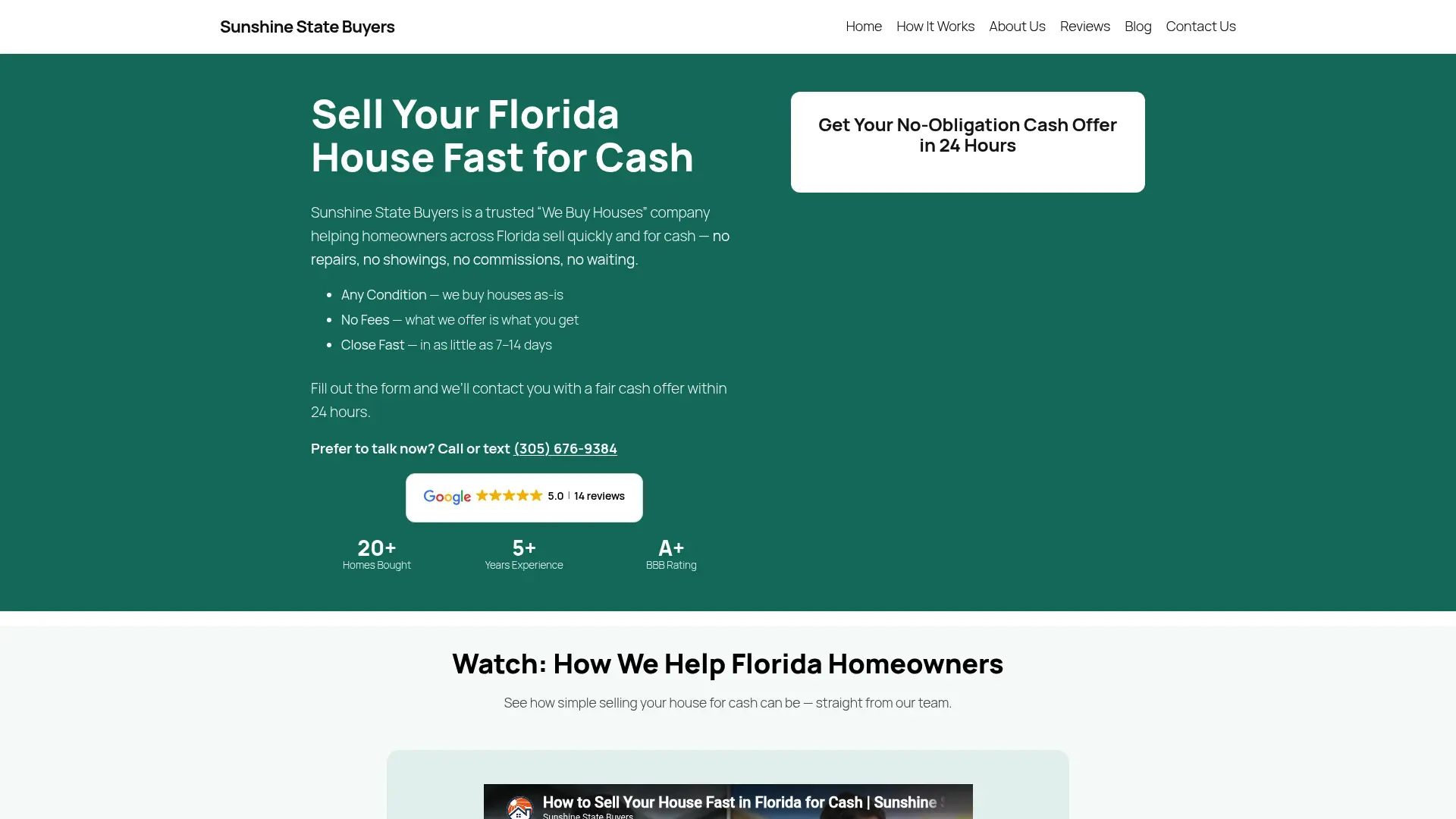
    Screenshot of the Sunshine State Buyers homepage, headlined "Sell Your Florida House Fast for Cash", with a no-obligation 24-hour cash offer form.

    Sellers pick their own closing date, usually 7 to 14 days out, whether you’re dealing with foreclosure, an inherited property, a tenant-occupied rental, or a house that needs more repairs than you want to take on. There’s no obligation attached to getting a number. Request your no-pressure cash offer today and see how it compares to what a traditional sale would actually net you.

    Where to Report Florida Real Estate Fraud

    Bookmark these before you need them:

    • Florida Attorney General consumer protection for scam complaints and alerts.
    • DBPR license complaints for licensed agent or broker misconduct.
    • Your county clerk’s office for property-fraud alert enrollment and recorded document disputes.
    • FBI’s IC3 for wire fraud and online scam reporting.

    Sources

    FAQ

    Are Cash Offers for Your House Legitimate?

    Yes. Cash offers are a legal, common way to sell in Florida, typically involving a written contract, escrowed earnest money, and closing through a licensed title company, according to the Florida Attorney General.

    What Are Common Current Cash Offer Scams?

    The most frequent ones include bait-and-switch contract changes, wire fraud through fake overpayment checks, deed and quit-claim fraud, foreclosure-rescue fee scams, and impersonation using forged proof-of-funds letters.

    Which Companies in Florida Offer the Best Cash Offers on Houses?

    The “best” offer depends on your property and timeline rather than one universal answer, but reputable buyers typically provide written offers within 24 hours, charge no upfront fees, and close through a licensed title company, giving you a transparent baseline to compare against other offers.

    Why Am I Getting Texts Offering to Buy My House?

    Investors and scammers alike pull public records, including foreclosure filings and probate listings, to identify homeowners who might sell quickly. Legitimate buyers will provide verifiable business details on request; scammers usually won’t.

    How Do I Verify a Cash Buyer’s Proof of Funds?

    Call the issuing bank directly using the phone number listed on the bank’s own website, not a number the buyer provides, and ask them to confirm the letter and account balance are genuine.

    This article was produced with AI assistance and reviewed for accuracy. It is provided for general information only and is not professional advice.

  • Florida Sellers: $10,000 Credit or Price Cut, Cash Now vs $59/Month

    Florida Sellers: $10,000 Credit or Price Cut, Cash Now vs $59/Month

    If your buyer needs help covering cash to close, a seller concession usually solves that faster than anything else. If the real problem is a low appraisal or a listing that’s stopped attracting offers, a price reduction fixes it permanently. Loan limits and appraisal rules decide which one you can actually use. The math below shows exactly how far $10,000 goes each way.


    TL;DR:

    • Seller concessions are best used when the buyer’s primary issue is cash to close, offering immediate relief without reducing the sales price.
    • Price reductions are more effective for addressing long-term costs, increasing listing visibility, and when appraisal values support decreasing the sale price.
    • Loan limits and appraisal rules restrict concessions to a percentage of the sale or appraised value, making excessive credits potentially count as a price cut.
    • A $10,000 concession roughly offsets $9,000 of closing costs, with minimal long-term monthly savings compared to a price reduction that lowers monthly payments by about $59.
    • In cases where market conditions or deal complexity favor certainty, a cash offer can bypass negotiations altogether, closing within 7 to 14 days without appraisal or financing contingencies.

    Table of Contents

    Seller Concessions vs Price Reduction: The Head-to-Head Comparison

    A seller concession is money you agree to put toward the buyer’s closing costs, points, or occasionally a rate buydown, layered on top of the agreed sales price. A price reduction lowers the sales price itself, which lowers the loan amount, the down payment, and every future monthly payment tied to that loan.

    The difference shows up immediately in the buyer’s wallet. A concession hands the buyer cash relief on closing day, but the loan amount stays anchored to the original, higher price. A price cut shrinks the loan permanently, which trims the monthly principal and interest for the life of the mortgage, though usually by a smaller amount than buyers expect on any single reduction.

    On the seller side, the two tactics hit differently too:

    • Concessions: sales price stays intact for comps and appraisal purposes, but you’re writing a check at the closing table.
    • Price reductions: can lower your commission and fee exposure since most fees are a percentage of sale price, and may reduce taxable capital gain.
    • Buyer perception: a public price cut can read as a red flag (“what’s wrong with this house?”), while a concession stays private in the closing paperwork.
    • Visibility: a lower list price can put you in front of a new pool of buyers who filter by price bracket; a concession does nothing for search visibility.

    Neither move is universally better. It depends on whether your buyer’s problem is cash today or debt tomorrow.

    By the Numbers: $10,000 Credit vs $10,000 Price Cut

    Assume a $400,000 listing, 10% down, a 30-year fixed loan at 6.75%, and standard closing costs of about 3% of the loan amount, consistent with the 2% to 5% range the CFPB cites nationally.

    The gap in immediate cash need between the two options is roughly $9,000 — the concession scenario needs about $40,800 at the table, versus $49,730 for the price cut, because the credit offsets closing costs dollar for dollar while the price cut only trims the down payment by $1,000 and closing costs by a few hundred dollars.

    The monthly payment tells the opposite story. The price cut saves about $59 a month in principal and interest. Over a 30-year term, that’s real money, but it takes roughly 14 years to match the $10,000 the concession delivered on day one. As BankPricer’s comparison notes, concessions solve short-term cash and early-payment pressure, while price cuts chip away at the financed balance permanently but modestly per month.

    Illustration of a couple watching a balance scale weigh money against a house, over a summary comparing cash needed at closing under a seller concession and under a price cut, the monthly principal-and-interest saving, and the roughly 14 years for that saving to match the credit

    Run this with a different loan program and the gap moves. A 5% down conventional loan or an FHA loan changes both the down payment savings and the mortgage insurance calculation, and a higher rate widens the monthly-payment gap between the two scenarios. Ask your lender to model your actual numbers before you decide, since broker guidance consistently flags how sensitive these outcomes are to down payment size and rate.

    How Loan Limits and Appraisals Shape Your Options

    Bar chart of Fannie Mae financing-concession caps: 3 percent above 90 percent LTV, 6 percent from 75.01 to 90 percent LTV, 9 percent at 75 percent LTV or below, and 2 percent on investment property

    You can’t offer unlimited concessions, and that ceiling is one of the biggest reasons sellers end up cutting price instead. Fannie Mae caps financing concessions on a principal residence at 3% of value when loan-to-value exceeds 90%, 6% when LTV falls between 75.01% and 90%, and 9% when LTV is 75% or lower. Investment properties are capped even tighter, at 2%. These limits apply to the lower of the sales price or the appraised value, not just the contract price you agreed to.

    Cross that line and the excess doesn’t just get rejected. It gets reclassified as a sales concession and deducted from the sales price for underwriting purposes, which can quietly shrink the buyer’s loan amount and blow up their financing.

    When a concession exceeds the allowable limit, the overage is treated as a reduction to the sales price for loan purposes. That means an oversized “credit” can function as an involuntary price cut anyway, just without the negotiating credit you might have gotten for it.

    There’s a meaningful distinction between financing concessions (closing costs, discount points, rate buydowns) and sales concessions (things like furniture, cars, or credits that exceed the cap). Some seller-paid fees that follow local custom, such as certain buyer-agent commissions, may fall outside these caps entirely, according to Fannie Mae’s guidance on customary fees. Freddie Mac issued its own clarifications on lender incentives and sales concessions effective September 2025, tightening definitions around what counts toward the cap.

    Before you agree to any credit:

    • Ask your lender what the LTV-based IPC cap actually is for this buyer’s loan.
    • Confirm which closing-cost line items concessions can legally cover, since they can never fund a down payment or reserves.
    • Ask whether the appraisal supports the full contract price, because concessions riding on an inflated price are the most common way deals fall apart in underwriting.

    Your Negotiation Checklist Before You Decide

    Work through this sequence before you counter an offer or list a price change:

    1. Check your showing-to-offer ratio. Plenty of showings but no offers usually points to a pricing problem, and a price cut fixes visibility faster than any credit.
    2. Check for showings with weak or no offers at all. If buyers aren’t touring, concessions won’t help. Reassess price, condition, or marketing first.
    3. Identify the actual barrier. If buyers love the home but keep citing cash-to-close as the sticking point, a concession removes that barrier directly.
    4. Ask your lender three questions: what closing costs are eligible, whether a credit can buy down the rate instead of just covering fees, and what the buyer’s specific IPC cap is.
    5. Ask your agent how price brackets affect exposure. A $399,000 listing and a $405,000 listing can show up in completely different buyer searches.
    6. Watch for red flags in offers built around concessions, especially a contract price that looks inflated to “create” credit room, since that’s exactly what triggers appraisal and underwriting pushback.

    Pro Tip: If a buyer’s offer bundles a big concession with a contract price higher than recent comps in your area, ask your agent to run a quick appraisal risk check before you sign. That structure is the single most common reason concession-heavy deals fall through in underwriting.

    Which Scenario Fits Your Situation?

    Real deals rarely match a textbook case perfectly, but most fall into a few recognizable patterns.

    • First-time buyer, strong income, thin savings: a concession usually helps more, since the barrier is cash on hand, not monthly affordability.
    • Seller who needs a fast, certain close (relocation, inherited property, tenant issues): negotiating either tactic takes time you may not have, and a direct cash sale can bypass both.
    • Buyer worried about long-term cost over a 30-year loan: a price reduction serves them better, even if it means less cash relief today.
    • Listing sitting with no offers after several weeks: a price cut addresses the visibility problem a concession can’t touch.
    • Appraisal came in low: a price cut is often your only real option, since concessions can’t fix a valuation gap.

    Whichever pattern matches your deal, get your lender to run the specific numbers before you commit. Estimates change with every rate and loan program.

    When a Cash Sale Skips the Negotiation Entirely

    Some sellers don’t want to weigh concessions against price cuts at all. They want out, on a known date, without financing contingencies or appraisal risk in the mix. Sunshine State Buyers works with Florida homeowners in exactly that position, delivering a cash offer within 24 hours and closing in as little as 7 to 14 days, on properties sold as-is, including foreclosures, inherited homes, and tenant-occupied rentals.

    There’s no appraisal to worry about, no IPC cap to negotiate around, and no buyer financing to fall through. If your priority is certainty over maximizing every last dollar through negotiation, a direct cash offer removes the concession-versus-price-cut question altogether. If you still have room to negotiate and time on your side, working through the checklist above with your agent and lender remains worth the effort.

    A Faster Path When Negotiating Isn’t Worth It

    Running the numbers on concessions and price cuts only matters if you have the time and the market conditions to negotiate in the first place. Sunshine State Buyers offers Florida homeowners a different route entirely: a cash offer within 24 hours, no repairs, no showings, and no commissions eating into your proceeds, with a closing date you pick, typically 7 to 14 days out.

    Sunshine State Buyers

    That structure matters most for sellers facing foreclosure, holding an inherited property with multiple heirs to satisfy, or dealing with a tenant-occupied rental that’s hard to show. There’s no financing contingency to worry about and no appraisal that can derail your closing date. If a traditional sale with concessions or price adjustments feels like more risk and delay than you want, see how the process works and request a no-obligation cash offer to compare against your other options.

    Where This Guidance Comes From

    Sources

    FAQ

    Is a seller concession a good idea?

    It’s a good idea when your buyer’s main obstacle is cash to close rather than long-term affordability, since concessions solve that problem directly without touching the sales price on record.

    What is better, seller credit or price reduction?

    Neither is universally better. Seller credit tends to win for immediate cash relief and closing-cost coverage, while a price reduction wins when the loan amount, appraisal, or long-term monthly cost is the real barrier.

    What does $10,000 in seller concessions mean?

    It means the seller pays $10,000 toward the buyer’s closing costs or points at settlement, while the sales price and loan amount stay unchanged, so the buyer’s cash needed at closing drops by roughly that amount.

    What is a fair price for a seller concession?

    A fair concession stays within your lender’s IPC cap, which Fannie Mae sets at 3% to 9% of value depending on loan-to-value, and typically matches what it actually takes to close the cash gap rather than an arbitrary round number.

    This article was produced with AI assistance and reviewed for accuracy. It is provided for general information only and is not professional advice.

  • Sell a Florida Home with Cast Iron Pipes Without Paying for Repairs

    Sell a Florida Home with Cast Iron Pipes Without Paying for Repairs

    If your Florida home was built before the mid-1970s, it likely has cast iron drain pipes, and Florida’s climate tends to wear them out faster than in many other areas. The single best next step is scheduling a sewer camera inspection before you see a backup, not after.


    TL;DR:

    • A sewer camera inspection is essential for homes built before the mid-1970s, as it accurately assesses pipe condition and guides repair or replacement decisions.
    • Costs for inspection typically range from $150 to $400, with condition grades from good to critical that influence immediate actions and repair prioritization.
    • Full replacement with PVC is more permanent but more expensive, costing $8,000 to $20,000, and is often recommended once multiple repairs or widespread corrosion are confirmed.
    • Florida’s climate accelerates cast iron pipe deterioration, making early inspection and proactive planning crucial to prevent environmental and health risks.
    • Selling as-is to a cash buyer like Sunshine State Buyers is a viable option for owners facing extensive repairs or wanting quick transactions, requiring only basic documentation.

    Table of Contents

    Warning Signs Your Cast Iron Pipes Florida Are Failing

    Cast iron doesn’t fail quietly. Slow drains that don’t respond to a plunger, gurgling sounds from toilets when a sink runs, and a persistent sewer smell near floor drains or the cleanout are usually the first tip-offs. Black sludge backing up into tubs or showers is a classic sign of interior corrosion scaling off the pipe wall.

    • Slow or backing-up drains in multiple fixtures at once
    • Foul odors near floor drains, the cleanout, or under sinks
    • Black, gritty sludge in tubs, showers, or washing machine discharge
    • Frequent clogs that clear temporarily, then return within weeks
    • Cracks in the slab, soft or damp spots in the yard, or unexplained sinkholes near the plumbing line
    • Mold or water staining on ceilings below bathrooms

    Foundation and yard signs matter just as much as what happens inside. A soft, mushy patch of lawn over the sewer line, or a hairline crack creeping across the slab, often points to a leak that’s been eating away at the soil underneath for months.

    Florida accelerates all of it. High humidity averaging around 75% in Miami, corrosive soil chemistry, salt air in coastal neighborhoods, and pipes that run near capacity year-round all speed up the rust-and-scale cycle that eventually eats through cast iron from the inside. Many local plumbing guides use a simple scale: good condition means monitor annually, fair means plan replacement within two to five years, poor means replace soon, and critical means act now.

    Close-up of corroded interior of cast iron pipe

    Pro Tip: Don’t wait for a full backup to act. A pipe graded “fair” today can slide into “poor” within a single Florida hurricane season if ground shifting or heavy rain adds stress to already thinning walls.

    What a Sewer Camera Inspection Involves and What It Costs

    A sewer camera inspection sends a waterproof, lighted camera through your drain line from an existing cleanout or access point, capturing live video and still photos of the pipe’s interior. It’s the fastest way to confirm whether you’re dealing with light scale buildup or advanced structural failure, without tearing into a wall or the yard first.

    Most Florida homeowners pay between $150 and $400 for this inspection, with the final number depending on pipe length, how easy the access point is to reach, and local labor rates. Plumbers typically translate what they see into a condition grade:

    • Good: minor scaling, no action needed beyond routine monitoring
    • Fair: moderate corrosion, plan for replacement within a few years
    • Poor: significant pitting or narrowing, schedule repair soon
    • Critical: active leaks or collapse risk, replace immediately

    Ask for both the video file and a written summary. Sewer camera footage is often the most persuasive documentation you can hand a buyer, an insurance adjuster, or a contractor bidding on the job, since it removes any guesswork about what’s actually happening underground.

    Repair or Replace: Comparing Your Options and Costs

    Once you know the condition grade, the real decision is whether to repair the existing line or replace it outright. Each option carries a different cost, disruption level, and expected lifespan.

    1. Trenchless epoxy lining. A contractor coats the interior of the existing pipe with epoxy resin, effectively creating a new pipe inside the old one without digging up your yard or slab. It works best when the cast iron still has structural integrity and the damage is corrosion-based rather than collapse. Cost typically runs $4,000 to $15,000, and it can add meaningful years of service life.
    2. Sectional or spot repairs. A plumber cuts out and replaces a single damaged section, often with a mechanical clamp or short PVC insert. This is usually a stopgap for an isolated failure, not a systemic fix, and because corrosion in cast iron tends to be spread across the whole line, repeat failures elsewhere are common after a spot repair.
    3. Full replacement with PVC. Whether through traditional trenching or pipe bursting, a complete repipe replaces the entire cast iron run with PVC. It costs more upfront, commonly $8,000 to $20,000 or higher depending on home size and existing damage, but PVC systems typically last 50 years or more, making this the most permanent option.

    Not every home qualifies for trenchless methods. Eligibility depends on pipe configuration, access points, and how far the collapse has progressed, which is exactly why the camera inspection comes first.

    Replacement usually becomes the more cost-effective path once you’ve paid for two or more spot repairs on the same line, or once camera footage shows corrosion spread across multiple sections rather than one isolated spot. If you’re seeing structural signs like slab cracking or yard sinkholes alongside plumbing symptoms, that’s a strong trigger to move straight to replacement instead of another round of patching.

    Insurance, Disclosure, and Your Selling Options

    Homeowners insurance in Florida generally draws a hard line between sudden damage and gradual wear. A pipe that bursts overnight and floods a bathroom may be covered. Slow, long-term corrosion that eventually causes a leak is often excluded, so check your policy language carefully, including any Citizens Property Insurance provisions if that’s your carrier.

    Florida law requires sellers to disclose known material defects, and a sewer camera report showing poor or critical condition qualifies. Once that footage exists, buyers and their agents will factor it directly into negotiations, sometimes asking for a price cut equal to the full repair estimate.

    You generally have three practical routes as a seller:

    • Repair before listing. This protects your asking price but means paying for the work and living through the disruption, or delaying a sale by weeks.
    • Offer a credit or price reduction. You keep the home on the traditional market but let the buyer handle the fix, usually at a steeper discount than the actual repair cost.
    • Sell as-is. You skip repairs, negotiations over plumbing credits, and the inspection back-and-forth entirely, trading some equity for speed and certainty.

    Each path is a different trade between time, net proceeds, and how much hassle you’re willing to take on. For homes with genuinely extensive plumbing or foundation issues, the traditional market often narrows to buyers willing to take on a major project, which limits your pool and your leverage.

    When Selling As-Is to a Cash Buyer Makes Sense

    Sunshine State Buyers purchases homes across Florida for cash, in as-is condition, with offers delivered within 24 hours and closings typically in 7 to 14 days. The company holds an A+ BBB rating and works statewide with sellers facing exactly the kind of plumbing and foundation headaches this article covers.

    This route tends to fit best for inherited properties nobody wants to renovate, owners facing foreclosure timelines that don’t leave room for a repipe, landlords dealing with a tenant-occupied unit with failing drains, or anyone who’s seen the camera footage and simply doesn’t want to manage a repair project. You won’t need to fix a single pipe, stage the house, or schedule showings. Expect to provide basic documentation like the deed and mortgage status, and little else.

    Environmental and Health Risks of Failing Cast Iron Pipes

    A failing sewer line isn’t just a plumbing headache. It’s a slow leak of wastewater into soil, groundwater, and sometimes your own living space. Black sludge backing up into a tub or shower carries bacteria and sewer gas, and repeated exposure in bathrooms or laundry areas can aggravate respiratory issues or skin irritation, particularly for kids, older adults, or anyone with existing sensitivities.

    Bathroom drain backed up with black sludge and early mold signs

    Underground, a cracked or collapsed line lets wastewater seep directly into the soil around your home’s foundation. In Florida’s already-saturated water table, that runoff can migrate toward drinking water wells in rural areas or contribute to standing moisture that feeds mold growth inside the structure. Persistent damp spots in a yard, paired with a sewage odor, are a strong signal that contamination has already started rather than being an isolated smell.

    There’s also a mold risk indoors. Slow leaks behind walls or under slabs create the exact humid, dark conditions mold needs to spread, often well before any visible staining shows up on a ceiling or wall. By the time you see discoloration, the mold has usually been growing for weeks. Combined with Florida’s baseline humidity, a hidden pipe leak can turn into a much larger air quality problem than the plumbing issue that started it, which is one more reason a camera inspection beats waiting for symptoms to appear on their own.

    Florida Codes and Regulations Affecting Cast Iron Pipe Work

    Florida’s plumbing code still references cast iron as an approved drain, waste, and vent material under ASTM A74 and CISPI 301 standards, even though PVC has become the default choice for new residential construction. Cast iron remains specified in some commercial and multi-story buildings where sound dampening or fire resistance is a priority, so it hasn’t disappeared from the code entirely.

    For homeowners, this means replacement work generally has to meet current code requirements even when it’s replacing an older cast iron system, not the standards that were in place when the home was originally built. That typically requires a permit, inspection at rough-in and final stages, and use of approved materials like PVC or, in some cases, new cast iron meeting the ASTM/CISPI specifications. Local building departments across Florida counties can vary slightly in permit fees and inspection scheduling, so it’s worth checking with your municipality before work begins, especially if you’re coordinating repairs around a pending home sale.

    Skipping permits on a repipe can create its own disclosure problem later. Unpermitted plumbing work is something Florida sellers are expected to disclose, and it can complicate a buyer’s financing or insurance approval even if the actual repair was done well.

    An Honest Take on Cast Iron Pipes and the Repair-Versus-Sell Decision

    Most advice on cast iron pipes treats repair as the default answer and selling as a last resort. That framing doesn’t hold up once you look at the actual costs. A full repipe running $8,000 to $20,000, stacked on top of permit delays and the disruption of trenching through a yard or slab, isn’t a small decision, and it’s not always the right one for every homeowner.

    What gets underweighted is how much a camera inspection report changes your leverage either way. Buyers respect documentation. A seller who shows up with a clear condition grade and a straight answer about the pipes usually negotiates from a stronger position than one who hopes nobody asks.

    The reader’s real priority should be information first, decision second. Get the inspection. Then decide whether repair, a price credit, or an as-is sale actually fits your timeline and finances, rather than assuming repair is automatically the responsible choice.

    — David

    Ready to Sell As-Is? Here’s What to Have on Hand

    If a sewer camera report or a plumber’s assessment has you leaning toward selling rather than repairing, the process with Sunshine State Buyers is straightforward. Have your deed, any recent inspection reports, a few photos of the property, and your current mortgage or foreclosure status ready before you reach out. From there, expect an offer within 24 hours and a closing date you choose, usually within 7 to 14 days.

    Unlike a traditional listing, where you’d need to complete repairs, stage the home, and wait through buyer financing timelines, this route skips all of it. There’s no need to line up a contractor for the pipes, negotiate a credit, or worry about a deal falling through over an inspection contingency. If you’re ready to see what a no-obligation cash offer looks like for your property, start with a fair cash offer and take it from there.

    Sources

    FAQ

    When did cast iron pipes stop being used in Florida?

    Most Florida homes stopped using cast iron for residential drain lines by the mid-1970s, when PVC became the standard material for new construction. Homes built before that period, especially in older South Florida neighborhoods, are the most likely to still have the original cast iron system.

    Should you buy a house with cast iron pipes?

    You can, but insist on a sewer camera inspection first so you know the actual condition grade before closing. A home with cast iron graded good or fair is manageable, while poor or critical condition should factor directly into your offer or repair negotiations.

    Can you still buy cast iron pipes?

    Yes, cast iron pipe meeting ASTM A74 and CISPI 301 standards is still manufactured and used in certain commercial and multi-story applications, though PVC dominates residential plumbing today.

    Can you sell a house with cast iron pipes?

    Yes, Florida law simply requires you to disclose known material defects, including a poor or critical sewer camera result. Sellers can repair the pipes before listing, offer a credit to the buyer, or sell as-is to a cash buyer like Sunshine State Buyers without doing any of the plumbing work themselves.

    Where cast iron turns up most

    Homes built before 1975 are where this lives, which covers a great deal of Little Havana, the older housing stock in Coral Gables, and most of North Miami. Each page explains how original plumbing tends to play out in a sale there.

  • Miami Foreclosure Timeline and Your Options

    Miami Foreclosure Timeline and Your Options

    If you are trying to understand the miami foreclosure timeline, you are probably feeling a mix of fear and confusion.

    • Maybe you have already missed a few payments.
    • Maybe the letters from the bank are starting to sound more serious.
    • Maybe you have seen the word foreclosure in writing and it made your stomach drop.

    You are not the only one in this position. Every month, homeowners in Miami Dade fall behind for reasons that are often outside their control. Job loss, medical bills, divorce or rental problems can hit anyone.

    At Sunshine State Buyers, we talk to owners in this situation every week. Our goal in this guide is to explain the foreclosure process in Miami in plain language, show you what usually happens at each stage, and walk through real options, including how you can sell house to avoid foreclosure miami if that turns out to be the best path.

    What Foreclosure Really Means In Miami

    Foreclosure is the legal process that allows a lender to take back a property when the borrower stops making payments. It sounds harsh, and it can be, but there are steps along the way where you still have choices.

    Understanding the miami foreclosure timeline is important because:

    • It shows you where you are right now
    • It helps you see what options are still open
    • It reminds you that doing nothing is the worst plan

    The exact timing can vary from case to case, so think of this as a general road map, not a strict calendar. If you are unsure about your specific situation, you should always speak with a local attorney or housing counselor.

    The Miami Foreclosure Timeline In Simple Steps

    Every lender is a little different, but most follow a similar pattern. Here is what often happens once payments are missed.

    1. One missed payment

    At this stage you may:

    • Pay a late fee
    • Start getting reminder letters or calls

    Your credit may already be affected, but the bank usually sees this as a warning sign, not a crisis, especially if you get back on track quickly.

    2. Several missed payments

    After a few months of missed payments:

    • Collection calls and letters become more serious
    • The lender may assign your loan to a loss mitigation department
    • You may start seeing notices about possible foreclosure

    This is often the best time to reach out, ask for help and explore options like payment plans or temporary relief.

    3. Filing of the foreclosure lawsuit

    In Florida, foreclosure is a court process. At this stage:

    • The lender files a lawsuit
    • You are served with legal papers
    • You have a limited time to respond

    This is where many owners really start to search for how long does foreclosure take in miami and what, if anything, they can still do. You still have options, but the clock feels tighter.

    4. Court process and judgment

    If the case moves forward:

    • The court reviews the file
    • You may have hearings or deadlines to meet
    • The judge can enter a final judgment of foreclosure

    Once judgment is entered, the property can be scheduled for a foreclosure sale.

    5. Foreclosure sale date

    At this point:

    • The property is set for auction on a specific date
    • If nothing changes, the home will be sold and you will lose ownership

    Even here, some options remain, but they are harder to use. That is why acting earlier in the foreclosure process in Miami is almost always better.

    Your Main Options At Different Stages

    No two situations are identical, but most owners who want to stop foreclosure miami end up looking at a few common paths.

    Try to catch up or modify the loan

    If you are early in the process and your income is stable again, you might:

    • Set up a repayment plan for missed payments
    • Request a temporary forbearance
    • Apply for a loan modification

    These options can work if the gap between what you owe and what you can pay is small enough and if you start early. Your lender can explain what is available for your specific loan.

    Refinance the property

    If you still have good credit and enough equity, refinancing might:

    • Lower your payment
    • Extend your term
    • Help you catch up

    For many owners in trouble, refinancing is not realistic, but it is still worth asking about if your situation has improved.

    Sell house to avoid foreclosure Miami on the open market

    If you have equity and a little time, you can list the house with an agent:

    • The property sells
    • The mortgage is paid off at closing
    • You keep whatever is left after costs

    This can work, but you still need:

    • Enough time before the foreclosure sale
    • A house that can qualify for buyer financing
    • Money for repairs and holding costs while you wait

    If your home needs work or you are already deep into the miami foreclosure timeline, this option can be hard to pull off.

    Sell directly to a local cash buyer

    If you want a quicker, more certain path, you can sell house to avoid foreclosure miami directly to a cash buyer like us at Sunshine State Buyers.

    In that case:

    • You sell in as is condition
    • We pay cash, so there is no lender delay
    • The mortgage is usually paid off from the sale at closing

    This route can fit when:

    • You do not have money for repairs
    • You cannot carry the house for much longer
    • You want a clear closing date and a fresh start

    You can read more about how we buy on our We Buy Houses in Miami page and how we compare options on our Stop Foreclosure Miami page.

    When Selling Fast Makes The Most Sense

    There is no shame in deciding that selling is the best way to stop foreclosure miami and protect your future.

    Selling quickly, especially to a cash buyer, may be the right move if:

    • Your income has dropped and is not likely to bounce back soon
    • You are several months behind and cannot catch up
    • The home needs major repairs you cannot afford
    • The stress is affecting your health, sleep or relationships

    In these cases, holding on at all costs can actually make things worse. A clean sale can:

    • Protect your credit from a completed foreclosure
    • Remove a big monthly bill
    • Give you some breathing room to regroup

    We see many owners in Miami Dade who wish they had talked to us earlier in the miami foreclosure timeline, before interest, fees and stress stacked up.

    FAQs About The Foreclosure Process In Miami

    How long does foreclosure take in Miami?

    The answer to how long does foreclosure take in miami depends on the court, the lender and your situation. It is not overnight, but it also does not take forever. You usually have some months between the first missed payment and a foreclosure sale, but the exact timing varies.

    Can I really sell my house once foreclosure has started?

    In many cases yes, as long as the foreclosure sale has not happened yet. If you sell and close before the auction date, the mortgage is usually paid off from the closing proceeds and the foreclosure action is resolved.

    Will I owe money after foreclosure?

    If the house sells for less than what you owe, there can sometimes be a deficiency. The rules are complex, so you should talk with a local attorney about how this might apply to you. Selling before the foreclosure sale can sometimes help you avoid or reduce this risk.

    Do I have to fix my house before selling to a cash buyer?

    No. When you sell house to avoid foreclosure miami to us, we buy in as is condition. You do not need to repair, update or even fully clean the property. We factor its condition into our offer and take care of the work later.

    What if I have very little equity?

    Even with limited equity, a sale can sometimes make more sense than letting foreclosure run its course. We look at each property and loan individually and give you an honest answer about what is possible. In some cases, other options like a short sale or working directly with your lender may be better, and we will tell you that.

    How We Help You Through Foreclosure In Miami

    At Sunshine State Buyers, we understand that reading about the miami foreclosure timeline is not just about dates and steps. It is about your home, your credit and your peace of mind.

    Our role is to give you a simple, local option that respects your situation and your time. Here is how we usually work with homeowners who are behind on payments:

    • You contact our team and tell us what is happening with your mortgage
    • We review your property, your area and your payoff amount
    • We give you a clear, written cash offer
    • You decide if selling to us is the right move
    • If you say yes, you choose the closing date and we handle the details with the title company and your lender

    We buy houses in as is condition across Miami and Miami Dade County, in the neighborhoods listed on our Service Areas page, including Miami, Hialeah, Doral, Homestead, Miami Gardens, Coral Gables and more.

    If you are somewhere on the foreclosure process in Miami and you want to know what a real offer would look like, you can read more about our approach on our We Buy Houses in Miami page, then request a free, no obligation offer through our Stop Foreclosure Miami page.

    You do not have to wait for the bank to make the next move. With clear information and a concrete option in front of you, you can decide what is best for your future and take that step on your own terms.

  • Miami Condo Selling Guide: HOA Issues and Assessments

    Miami Condo Selling Guide: HOA Issues and Assessments

    If you own a condo in Brickell, Downtown, Edgewater, Doral, or Miami Beach, you already know that condo living is different from owning a single-family home. When it is time to sell, those differences really show up. This Miami condo selling guide focuses on the part that confuses buyers the most: HOA fees, rules, and special assessments.

    Some buyers fall in love with your view, your building, and your location, then back off as soon as they see the monthly HOA dues or hear about a recent assessment. Others want the security of a strong association, but feel nervous when they read your condo documents. If you want to sell a condo fast in Miami, understanding how HOAs look from a buyer’s point of view can make a big difference.

    The good news is that you do not have to figure it all out alone. A local company like Sunshine State Buyers regularly works with Miami owners who are trying to sell condos with complicated HOA stories, and there are clear steps you can take to keep things moving.

    Why HOA Rules Matter When You Sell a Miami Condo

    When someone buys a single-family home, they mostly focus on the property itself. When they buy a condo in Miami, they are also buying into the community, the management, and the financial health of the association.

    That means buyers will look at:

    • The rules and restrictions in the condo documents
    • Whether rentals are allowed and what the limits are
    • Pet policies, parking rules, and guest policies
    • The association’s budget, reserve, and history of assessments

    If you are putting together a Miami condo selling guide for yourself before listing or reaching out to a buyer, think about your building from an outsider’s point of view. Are the rules clear and reasonable? Does the building feel well cared for? Are there any unresolved disputes or lawsuits that might scare buyers away? Being ready with honest, simple answers can help you sell faster and avoid surprises later.

    Understanding Condo HOA Fees in Miami

    What your monthly HOA fees actually cover

    Many buyers see a big monthly number and assume it is just an extra bill. In reality, condo HOA fees in Miami usually cover a lot of things that single-family owners pay separately, such as:

    • Building insurance for the structure
    • Water, trash, and sometimes basic cable or internet
    • Maintenance of elevators, lobby, pool, and common areas
    • Reserves for future repairs and replacements

    If your HOA dues are higher than a buyer expects, it can help to break down what they include. An AA well-run building with strong reserves and regular maintenance can be a better long-term choice than a building with low dues and no money saved for future work.

    How buyers compare HOA fees between buildings

    When buyers shop for condos in Miami, they do not just compare list prices. They also compare:

    • Monthly HOA dues
    • Property taxes
    • Expected utilities

    A unit with a lower price but very high dues might feel less attractive than a slightly more expensive unit with moderate dues.

    As a seller, your goal is to show that your fees make sense for what the building offers. If your building has strong security, amenities, and a healthy reserve fund, say so. Clear communication builds trust and can help serious buyers stay interested.

    Special Assessments in Miami Condos

    Special assessments are one of the biggest concerns in any Miami condo selling guide. They can scare buyers away if you do not handle them clearly.

    What is a special assessment?

    A special assessment is an extra charge that owners pay on top of regular dues, often for:

    • Major repairs, such as roof or concrete work
    • Safety upgrades and code compliance
    • Unexpected damage or emergencies

    In Miami, many buildings have had to undergo expensive repairs in recent years. That means special assessments are not unusual, especially in older buildings or those near the water.

    How assessments affect your sales

    If there is an active or upcoming assessment, buyers will want to know:

    • The total amount and payment schedule
    • What work is being done and why
    • Whether the project is already underway or still being planned

    Sometimes, a seller agrees to pay off the assessment at closing to make the deal smoother. Other times, the buyer accepts responsibility but expects a lower price. Being upfront and flexible can keep negotiations moving.

    If you feel stuck with a large assessment and no clear path to closing, it may be worth talking to condo cash buyers in Miami who are used to factoring these issues into their offers.

    How HOA Issues Can Slow or Stop a Condo Sale

    Even if you have an interested buyer, HOA problems can cause delays or cause the deal to fall apart.

    Common issues include:

    • Associations are slow to provide documents and applications
    • Disputes about rental rules or pet rules
    • Incomplete or unclear financial statements
    • Pending legal cases involving the association

    These items make buyers nervous, and some lenders will refuse to finance a unit in a building with serious issues. If you need to sell a condo fast in Miami and you know your building has a complicated history, it is important to prepare in advance.

    You can start by gathering your documents, talking to your board or management company, and understanding where your building stands. If things still look difficult, you can compare a traditional sale with a direct offer from a local buyer who pays cash and does not need a lender’s approval. The We Buy Houses in Miami guide is useful when you want to see how a quick, as-is sale compares with the listing.

    Selling a Condo With HOA Problems: Your Options in Miami

    If your building is well run and your dues are reasonable, a standard listing may be enough. If you are dealing with high dues, recent assessments, or nervous buyers, you might want to explore other options.

    Option 1: Traditional listing with clear communication

    You can list your condo with an agent, but you will want to:

    • Be honest about fees and assessments
    • Provide documents quickly when requested.
    • Work closely with your association to avoid delays.

    This can work if you are not in a rush and the issues are not severe.

    Option 2: Adjust price and terms

    Sometimes you can keep a buyer interested by:

    • Offering a small price reduction
    • Agreeing to pay part or all of an assessment at closing
    • Being flexible on closing dates

    This still leaves you on the open market, but shows that you are serious about making the deal work.

    Option 3: Sell directly to condo cash buyers in Miami

    If you feel overwhelmed by HOA issues, assessments, or a long selling process, you can reach out to a local buyer such as Sunshine State Buyers. Instead of listing your condo, you sell it directly, often in an as-is condition.

    You do not have to stage the unit, hold an open house, or wait for a buyer’s lender. Because they buy with cash, they can often work around association timelines and issues that would scare off traditional buyers. You still need the association to approve the transfer, but there is only one buyer and one negotiation to manage.

    To see if your building is in their area, you can check the Service Areas page. It covers many condo-heavy parts of Miami-Dade, including Brickell, Downtown, Edgewater, Doral, a nd Miami Beach.

    FAQs About Selling a Condo in Miami With HOA Issues

    Can I sell my condo in Miami if there is a special assessment

    Yes. Many condo owners sell while an assessment is in place. You and the buyer will decide who pays what portion. Sometimes the seller pays it off at closing. Other times, the buyer takes over the remaining payments in exchange for a lower price.

    Do high HOA fees always scare buyers away?

    Not always. Buyers care more about value than the number alone. If condo HOA fees in Miami are high but include strong reserves, good maintenance, and useful services, serious buyers may still feel comfortable once they understand what they are paying for.

    Legal disputes or weak finances can make it harder for buyers to get loans. Some buyers will walk away when they see this. In those cases, selling to a cash buyer who is comfortable with more risk can be a practical solution.

    How long does it take to sell a condo in Miami

    The timeline varies. In a popular building with healthy finances, a traditional sale might close in a couple of months. In a building with issues, it can take much longer. A direct sale to a cash buyer, once approved by the association, can often close in a few weeks.

    Do I still need to clean or update the condo before a cash sale

    Many condo cash buyers in Miami are comfortable taking units in as-is condition. Light cleaning can always help, but you do not have to invest in major upgrades if that does not make sense for your situation.

    How Sunshine State Buyers Helps Miami Condo Owners Sell Fast

    Sunshine State Buyers is a local home buying company based in Miami that works with both single-family homes and condos. They regularly help owners who want to sell quickly but feel stuck because of HOA fees, rules, or assessments.

    Instead of listing your condo on the open market, you can contact their team, share your situation, and let them review the property and the building. They then prepare a simple cash offer. If the number and timing work for you, you choose a closing date, and they coordinate with a local title company and your association to complete the sale.

    They buy in many of the communities listed on their Service Areas page, including Brickell, Downtown, Edgewater, Doral, Miami Beach, and other condo-heavy parts of Miami-Dade. Their goal is to help you move on from a complicated condo situation without months of showings and uncertainty.

    If you are ready to see what selling your condo might look like with a direct buyer, you can read more about their process on the We Buy Houses in Miami page, then request your free cash offer through the We Buy Houses in Miami page. One straightforward conversation can show you your options and help you decide whether a fast, as-is sale is the right move for your Miami condo.

    Where these problems concentrate

    Nowhere in Miami feels this harder than Brickell, where a milestone inspection or a reserve study can decide whether the whole building is financeable — and when it is not, every financed buyer disappears at once. That page covers what it means for your sale. For the rest of the county, see selling a Miami condo fast.

  • Are Cash Home Buyers Legit in Miami? (Red Flags to Avoid)

    Are Cash Home Buyers Legit in Miami? (Red Flags to Avoid)

    If you’ve seen ads or signs that say “We Buy Houses for Cash in Miami,” you’re not alone. These offers are everywhere — and for good reason. Cash home buyers help homeowners sell fast, skip repairs, and close without fees. But with so many companies popping up, you might be asking yourself:

    👉 Are all cash home buyers in Miami legit?
    👉 Or are some just taking advantage of sellers in stressful situations?

    The truth is, there are legitimate cash home buyers in Miami — and then there are others who make the entire industry look bad. Let’s break down how to tell the difference, what red flags to watch out for, and how to protect yourself when selling your home for cash.

    💰 First — What Is a Legitimate Cash Home Buyer?

    A legit cash home buyer is a real estate company or individual that:

    – Has actual funds available to buy your property quickly
    – Makes transparent offers based on current market conditions
    – Handles all paperwork through a licensed title company
    – Lets you choose the closing date
    – Never pressures or tricks you into signing anything

    At Sunshine State Buyers, for example, we use local title companies, put everything in writing, and pay all closing costs. You’ll always know exactly what you’re getting — no games, no surprises.

    🏦 How Cash Buyers Work in Miami

    When you work with a trusted local buyer:

    1. You request an offer — online or over the phone.
    2. They visit or review your home (no repairs needed).
    3. You get a no-obligation cash offer within 24 hours.
    4. If you accept, they handle all title work and closing details.
    5. You choose the date to close and receive full payment.

    It’s that simple. But scammers and inexperienced investors often pretend to operate this way — which is where sellers need to be careful.

    🚩 Common Red Flags to Watch Out For

    Unfortunately, not every “we buy houses” company in Miami operates ethically. Here are the biggest warning signs that a buyer may not be legit:

    ❌ 1. No Local Presence or Office

    If the company doesn’t list a Miami address or refuses to meet in person, that’s a red flag. Legit buyers work locally, know the area, and are comfortable meeting face-to-face.

    Ask: “Where is your office located? Are you based here in South Florida?”

    If they can’t answer clearly — move on.

    ❌ 2. No Proof of Funds

    A real cash buyer should be able to show bank proof of funds or a hard money approval letter if requested. Scammers often put homes “under contract” and then try to find another buyer before they actually have the money to close.

    Ask: “Can you provide proof of funds before I sign a contract?”

    If they avoid the question, it’s a deal-breaker.

    ❌ 3. High-Pressure Tactics

    Watch out for buyers who say:

    – “You have to sign today”
    – “This offer expires in 24 hours”
    – “We’ll only buy if you don’t talk to anyone else”

    Legit buyers like Sunshine State Buyers will never rush you. A trustworthy company gives you time to think, talk with family, and even compare offers.

    ❌ 4. No Title Company Involvement

    Every legitimate home sale in Florida goes through a licensed title company or real estate attorney. That’s who ensures your deed is clean and handles your payment securely.

    If a buyer says they’ll “handle everything themselves” or asks you to skip a title company, that’s a serious red flag.

    ❌ 5. Overpromising Then Reducing the Price

    Some unethical buyers will offer you an inflated price to get your signature — then lower it days before closing, hoping you’ll accept because you’re tired or desperate.

    This tactic is known as a “bait and switch.” Legit buyers are upfront and honor the price they offer (barring unexpected title issues). Learn more about avoiding lowball tactics.

    🕵️‍♂️ How to Verify a Cash Home Buyer in Miami

    You don’t need to be a real estate expert to protect yourself — just follow these steps:

    – Check Reviews: Search Google and the Better Business Bureau for verified reviews. Look for consistent 5-star ratings and detailed customer experiences.
    – Look for a Real Website: Professional buyers invest in their online presence. Scam operations often have no website or use a generic template without real photos or team names.
    – Ask Who Handles Closing: Make sure they use a reputable Miami title company (you can even call that company to confirm).
    – Confirm They Buy As-Is: If they start demanding repairs or appraisals — they’re not a real cash buyer.
    – Ask for References: Honest buyers will gladly connect you with past sellers who can vouch for them.

    🌴 Why Miami Has So Many Cash Home Buyers

    Miami’s real estate market attracts investors from all over the world — but not all of them are professionals. Some are legitimate local buyers (like Sunshine State Buyers), while others are out-of-state wholesalers trying to profit by reselling contracts.

    That’s why local expertise matters. A genuine Miami buyer understands:

    – City permitting and code enforcement
    – Flood zones and insurance hurdles
    – Property values across neighborhoods (Hialeah, Kendall, Homestead, etc.)

    When you work with a local buyer, you’re dealing with someone who knows your situation — not a random call center in another state.

    ✅ The Benefits of Selling to a Legit Cash Home Buyer

    If you find the right company, selling your Miami home for cash can be a win-win. Here’s what you can expect:

    – Fast closings: 7–14 days on your timeline
    – No agent commissions or fees
    – No repairs or cleaning required
    – No open houses or strangers walking through your home
    – Certainty: You know your closing date and net amount from day one

    This approach is especially helpful for:

    – Homeowners facing foreclosure
    – Families selling inherited properties
    – Landlords with tenant issues
    – Anyone needing a guaranteed sale

    ☀️ Why Sunshine State Buyers Is Trusted in Miami

    At Sunshine State Buyers, we’ve built our business around honesty and transparency. We’re a local Miami company that’s helped homeowners across South Florida sell quickly and confidently.

    We always:

    – Provide clear written offers (no hidden fees)
    – Work with licensed local title companies
    – Communicate honestly about your options — even if that means a traditional sale is better for you

    When you call us, you’ll talk to a real person who lives here, not a national call center. That’s what makes our offers simple, fair, and 100% legitimate.

    📞 Ready to See What a Legit Cash Offer Looks Like?

    If you’re curious about selling your Miami home for cash but want to make sure it’s legit — we get it. We’ll answer every question, show you how our process works, and provide a free, no-obligation offer you can trust.

    👉 Click here to get your cash offer today or call (305) 676-9384 to speak directly with our team.

    No pressure. No hidden fees. Just clarity.

    🏁 Final Thoughts

    So, are cash home buyers in Miami legit?
    ✅ Yes — but only the right ones.

    The key is to look for transparency, professionalism, and local credibility. If a buyer avoids questions, hides details, or pressures you to sign — walk away.

    When done right, selling your Miami home for cash can be fast, fair, and completely legitimate.

  • Miami Home Seller Closing Costs Explained (And How to Avoid Paying Them)

    Miami Home Seller Closing Costs Explained (And How to Avoid Paying Them)

    Selling your house in Miami? Between title fees, agent commissions, and transfer taxes, closing costs can quickly eat away at your profit—especially if you’re trying to sell fast or as-is.

    But here’s the good news: you can sell your Miami home without paying most of these costs. Let’s break down exactly what’s included, who typically pays for what, and how a local cash home buyer like Sunshine State Buyers can help you walk away with more money in your pocket.


    💸 What Are Closing Costs When Selling a House in Miami?

    Closing costs are all the fees and expenses that come with finalizing the sale of your home.

    In Miami (and throughout Florida), these typically include:

    • Title search & title insurance: Protects the buyer (and sometimes the seller) from ownership disputes.
    • Documentary stamp taxes: A state tax on the transfer of real estate.
    • Recording fees: Paid to the county to record the deed transfer.
    • Property taxes & prorations: Any unpaid taxes up to the closing date.
    • Attorney or escrow fees: Paid to the title company or attorney handling the closing.
    • Real estate agent commissions: Usually 5–6% of the sale price.

    💰 Average total closing costs for Miami home sellers: between 6% and 10% of your sale price once commissions are factored in.


    🧾 Example Breakdown: Traditional Sale vs. Cash Sale

    ExpenseTraditional Sale (Listed)Cash Sale (Sunshine State Buyers)
    Agent Commission5–6%❌ $0
    Title Fees$1,000–$2,000✅ Covered by Buyer
    Repairs/Inspections$3,000–$15,000+❌ $0 (We Buy As-Is)
    Staging & Cleaning$500–$1,500❌ $0
    Closing Costs$2,000–$4,000✅ Covered by Buyer
    Total Out-of-Pocket Costs$10,000–$25,000+$0

    ✅ With a direct cash offer from Sunshine State Buyers, you skip the agents, repairs, and most closing costs altogether.


    🕒 When Are Closing Costs Paid in Miami?

    Closing costs are usually deducted at the closing table from the seller’s proceeds. That means if you sell your home for $400,000, you might only walk away with $360,000 or less after fees.

    When you work with a Miami cash buyer, however, you get a clear, upfront offer—and what we agree on is what you take home. No surprise deductions.


    ⚖️ Who Pays Closing Costs in Miami?

    Traditionally, both parties split certain costs, but in many real-world scenarios, sellers shoulder the bulk of them.
    Here’s how it usually breaks down:

    • Seller typically pays:
      • Title insurance (owner’s policy)
      • Transfer taxes
      • Real estate commissions
      • HOA estoppel fees (if applicable)
    • Buyer typically pays:
      • Title search (lender’s policy)
      • Loan origination fees
      • Appraisal & inspection fees


    With Sunshine State Buyers, we pay for all the standard seller-side costs—including title, closing, and transfer fees—so you keep the full amount we offer.


    🧰 How to Reduce or Avoid Closing Costs

    If you’re selling through a real estate agent, you can:

    • Negotiate a lower commission rate
    • Ask the buyer to cover title insurance or escrow fees
    • Avoid unnecessary upgrades and repairs before listing

    But if you’re selling as-is for cash, you can skip these steps entirely:

    • No realtor fees
    • No closing costs
    • No repairs or cleaning needed

    Just a straightforward cash offer and a quick closing on your timeline—sometimes in as little as 7 days.


    ☀️ Why Miami Sellers Choose Sunshine State Buyers

    At Sunshine State Buyers, we make selling simple:

    • ✅ No commissions or closing costs
    • ✅ No repairs or inspections
    • ✅ Fast closings (as little as 7 days)
    • ✅ Local Miami team you can trust

    We handle everything—from paperwork to title fees—so you can move on stress-free.


    📞 Ready to See Your Net Offer?

    Prefer to skip the math and find out exactly what you’ll walk away with?

    👉 Click here to fill out the form to get your free, no-obligation cash offer

    We’ll handle the closing costs, paperwork, and title work—you just pick your closing date.

    Or call us directly at (305) 676-9384 to talk with our friendly Miami team today.


    🏁 Final Thoughts

    Closing costs in Miami can be expensive, but they don’t have to be your problem.

    If you’re selling fast, selling as-is, or just don’t want to deal with realtor commissions and fees, Sunshine State Buyers is your easiest option.

    We buy houses across Miami, Hialeah, Kendall, Homestead, Doral, and all of South Florida—and we cover all the closing costs.

  • What Miami Cash Home Buyers Really Look For (How Offers Are Calculated)

    What Miami Cash Home Buyers Really Look For (How Offers Are Calculated)

    If you’re thinking about selling your house to a cash home buyer in Miami, you’ve probably wondered:

    “How do they decide what to offer me?”

    Good question — and it’s one that can help you get a better deal when you understand the process.

    Let’s break down exactly what cash buyers look for, how they calculate offers, and what factors can raise (or lower) your price.

    💰 1. Property Condition (Biggest Factor)

    Cash buyers purchase homes as-is, but they still estimate what repairs will cost after they buy.

    The more work needed, the lower the offer — simple math.

    Common repair deductions:

    • Roof or foundation issues
    • Outdated electrical or plumbing
    • Old kitchens or bathrooms
    • Water or mold damage

    🧠 Tip: Even small improvements like decluttering, mowing the lawn, or a quick pressure wash can help your home make a stronger first impression during evaluation.

    📍 2. Location, Location… Neighborhood

    In Miami, location is everything.

    Cash buyers look at:

    • Proximity to schools, shopping, and transportation
    • Neighborhood demand (e.g., Coral Gables vs. Opa-locka)
    • Flood zones and insurance risk

    Houses in desirable or up-and-coming neighborhoods often bring higher cash offers, even if they need repairs.

    📊 3. Comparable Sales (“Comps”)

    Buyers check recent comparable sales — similar homes sold nearby within the last 3–6 months.
    This helps set a “top market value” before subtracting repair and resale costs.

    Example:

    • Nearby homes sell for $450,000
    • Repairs estimated at $40,000
    • Buyer wants $30,000 profit after closing costs
    • Offer ≈ $380,000

    🕒 4. Speed and Certainty

    One of the biggest reasons sellers choose cash buyers is speed.

    Most Miami homeowners want to close fast — and investors value deals they can close without delays.

    The cleaner and faster the transaction looks (clear title, easy communication), the stronger the offer you’ll usually get.

    💸 5. Flexibility and Motivation

    If you can offer flexible terms — like letting the buyer close on their timeline or including furniture/appliances — you might get a higher number.

    Buyers appreciate less friction, and they’ll often pay more for it.

    ⚙️ How Sunshine State Buyers Calculates Offers

    At Sunshine State Buyers, our process is simple, transparent, and fair:

    1. We evaluate your property based on condition, neighborhood, and recent sales.
    2. We calculate repairs and closing costs.
    3. We present you with a no-obligation cash offer within 24 hours.
    4. You choose the closing date — 7 days or 30, your call.

    ✅ No repairs
    ✅ No fees or commissions
    ✅ No waiting for bank approvals

    Just a fair, fast offer from a local team that actually knows the Miami market.

    🔑 Final Thoughts

    Understanding what cash buyers look for helps you spot legit offers vs. lowballs — and puts you in control.

    The right buyer (and the right company) will be upfront, transparent, and respectful of your timeline.

    Ready to see what your house could sell for?
    👉 Click here to get your free cash offer today.

    📞 Or call us at (305) 676-9384 — we’ll give you a real offer, not a sales pitch.

    See the arithmetic worked through

    Several of our neighborhood pages show a full worked example — after-repair value, repairs, closing and holding costs, and the offer that comes out the other side. The shape is the same everywhere; the numbers are not. Compare Cutler Bay, Little Havana, North Miami, Coral Gables, Pembroke Pines and Brickell.

Call Now For A Cash Offer