Sell a House With Code Violations in Miami — As-Is, For Cash
Open permits, unpermitted work, accruing fines, or a code-enforcement lien? You can still sell. We buy Miami houses with violations as-is, for cash — and we handle the liens and paperwork at closing, so you don’t pay them out of pocket first.
- Violations & liens welcome — we buy anyway
- No financing to fall through — we pay cash, lenders can’t block us
- Stop the daily fines — close in as little as 7–14 days
Prefer to talk? Call or text (305) 676-9384
Get a No-Obligation Cash Offer in 24 Hours
Watch: How We Help Florida Homeowners
See how simple selling your house for cash can be — straight from our team.
Why Code Violations Make a Miami House So Hard to Sell
Code violations are more common in Miami than most people realize. The county has tens of thousands of open violations on record — roughly one in every 30 residential properties is carrying some unresolved building or zoning issue, plus thousands of expired permits where work was started but never finaled. Older homes, inherited properties, and houses with past renovations are especially likely to have an open permit or unpermitted work nobody knew about.
Here’s the real trap, and it’s not what most people expect. Selling a home with a violation is perfectly legal in Florida. The problem is financing: a mortgage lender generally won’t fund a loan on a house with open violations or unresolved liens. So you list, you get an offer, and the deal dies at the title search when the buyer’s lender backs out. Meanwhile, if there’s a code-enforcement fine, it may be accruing daily — in Miami-Dade, fines can run up to $250 a day and turn into a lien that follows the property until it’s paid.
That’s why a cash sale often makes sense here. We don’t need a lender’s approval, so the thing that kills traditional deals doesn’t stop us — and the sooner you sell, the sooner those daily fines stop growing.
We Buy the House — and Handle the Liens
You don’t have to fix anything, pull permits, or pay off fines before selling. We take the house as-is with the violations attached, and handle liens and fines at closing out of the sale proceeds. In many cases we can even petition Miami-Dade’s lien-reduction process to negotiate accrued fines down — sometimes to a fraction of face value — which can preserve more money for you. We do the calls, the paperwork, and the hearings. You pick the closing date.
Violations We Buy Around
Whatever’s on record against your property, we’ve likely dealt with it before.
Unpermitted Work
Enclosed porch, converted garage, added room, or a re-roof done without a permit? The most common violation we see — and we buy anyway.
Open or Expired Permits
A permit that was pulled but never finaled — sometimes years ago by a prior owner. Lenders won’t fund it; we can.
Code-Enforcement Fines & Liens
Daily fines that ballooned into a recorded lien? We handle payoff or negotiate a reduction at closing.
Unsafe Structure or Failed Recert
Older home that failed its 40-year recertification or got an unsafe-structure notice? We take it on as-is.
Overgrown Lot / Junk Notices
Vacant or inherited property that racked up mow-the-lot or debris fines? Common, and completely workable.
Illegal Unit or Zoning Issue
An efficiency or added unit that isn’t zoned for it? We understand these and can still make a fair offer.
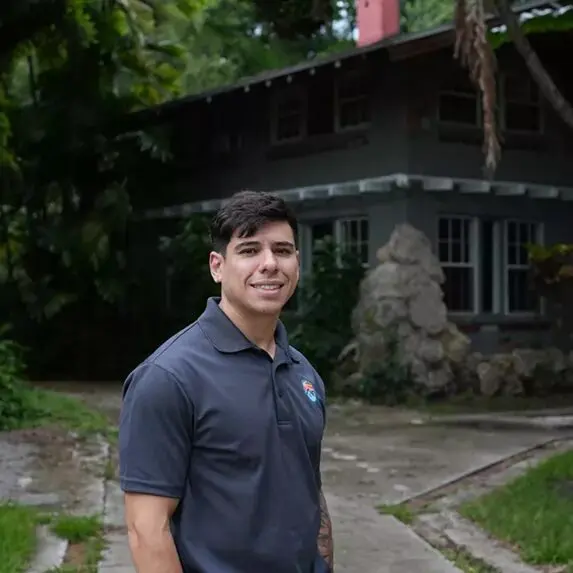
Meet David — He Knows Miami’s Code Maze
Hi, I’m David, founder of Sunshine State Buyers. I grew up in South Florida, and I’ve dealt with Miami-Dade’s code-enforcement and permitting system more times than I can count — open permits from the previous owner, unpermitted additions, liens that had been quietly growing for years. It’s a maze, and it traps a lot of good people who did nothing wrong.
When you call, you get a real local person who actually understands how these cases work. My promise is simple: a fair offer, explained honestly — and if there’s a cheaper way for you to clear the violation and sell for more, I’ll tell you that too.
As Featured In
“I try to be honest with people and tell them if there might be better routes to sell their house.”
— David Veras, featured in Miami New Times
How to Sell Your Miami House As-Is — Simple as 1-2-3
No repairs, no permits to pull, no fines to pay upfront.
1
Tell Us What You Know
Share the property and any violations, permits, or fines you know about. Not sure what’s on record? We’ll help you find out.
2
Get Your Cash Offer
We check the county records, factor the violations and liens in honestly, and send a fair, no-obligation offer within 24 hours.
3
We Handle It & You Close
We deal with the liens, fines, and paperwork at closing, and you pick the date. The fines stop, and you walk away clean.
How the Liens Factor Into Your Offer
A simplified example of a Miami house with unpermitted work and an accrued fine.
Value if it were clean & fully permitted
$420,000
Bringing work to code + permitting
−$45,000
Accrued fine/lien payoff (after negotiation)
−$15,000
Closing costs & our margin
−$40,000
Your cash offer — liens handled
≈ $320,000
Illustrative only — every violation is different, and fine amounts vary widely. The point: you don’t pay the fines or repairs upfront. We handle them at closing, and the daily penalties stop the day we close.
One Honest Thing About Disclosure
Florida law requires you to disclose violations and unpermitted work you know about — it’s part of selling honestly, and it protects you from a lawsuit down the road. The good news: when you sell to us, disclosing is easy, because we expect the violations. We’re not going to walk away over an open permit or a lien — that’s exactly what we buy. So you can tell us everything up front without worrying it’ll kill the deal. If you’re not sure what’s on record, we can help you pull the county’s permit and lien history so there are no surprises.
One note: we’re a home-buying company, not attorneys. For anything involving the legal specifics of a lien or disclosure, we’d always suggest a quick word with a real estate attorney — and we can point you to local ones if you need.
How to Find Out What’s on Your Property’s Record
A lot of sellers genuinely don’t know what violations or open permits are attached to their home — especially on inherited or older properties where a previous owner did the work. Before you make any decisions, it’s worth knowing exactly what’s on record. Here’s how to check, and we’re happy to help you do it:
- Open permit / permit history — Miami-Dade County (and each city, like Miami, Hialeah, or Coral Gables) keeps a permit history by address. This shows permits that were pulled but never finaled with a final inspection.
- Code-enforcement cases & liens — a lien records search through Miami-Dade shows recorded code-enforcement liens, unpaid fines, and special-assessment liens attached to the property.
- Unsafe-structure or recertification notices — for older buildings, check whether a 40-year recertification is due or overdue, or whether an unsafe-structure case has been opened.
- What a standard title search may miss — a normal title search doesn’t always catch a code case that’s open but not yet recorded as a lien, or unpermitted work no agency has flagged. That’s why it’s worth pulling the building-department records directly.
If digging through county portals sounds like a headache, don’t worry about it — when you reach out, we can pull the permit and code-enforcement history for you as part of putting together your offer. No cost, no obligation. You’ll know exactly what you’re dealing with before you decide anything.
Two Things Worth Knowing About Miami Fines
Accrued fines can often be reduced
Here’s something a lot of homeowners don’t realize: a fine that has ballooned into the tens of thousands isn’t always paid at face value. Miami-Dade has a lien-reduction process where, once the underlying violation is addressed, you can petition to reduce the accumulated fines — sometimes down to a fraction of the original amount. It involves a hearing before a special magistrate, and it takes time and paperwork. When you sell to us, this is one of the things we can handle on your behalf: we make the calls, file the petition, and attend the hearing, which can preserve more equity for you than simply paying the fine in full.
Older homes and the 40-year recertification
Miami-Dade requires older buildings to pass a structural and electrical recertification at 40 years, and again periodically after that. Since the Surfside tragedy, this is enforced more seriously than ever. If your property is due or overdue, a failed or missing recertification can become a violation — and it scares off traditional buyers and their lenders. If that’s your situation, you’re a good fit for a cash sale: we take on the recertification and any required work ourselves, so you don’t have to coordinate engineers and contractors before you can sell.
Because code enforcement is local, we work in your specific city’s ordinance — statewide. See how we buy code-violation homes across Florida.
Code Violation Selling FAQs
Can I really sell a house with open code violations?
Yes. It’s completely legal in Florida to sell a home with violations — you just have to disclose the ones you know about. The catch is that mortgage lenders usually won’t finance such a home, which is why these sales typically go to cash buyers like us.
Do I have to pay off the fines or liens before selling?
No. Liens and fines are handled at closing out of the sale proceeds — you don’t pay them out of pocket first. In many cases we can also petition Miami-Dade to reduce accrued fines, which can leave more money for you.
What if I don’t even know what violations my house has?
That’s very common — especially with inherited or older homes where a previous owner did the work. We can help you pull the county’s permit and code-enforcement history so you know exactly what’s on record before you decide anything.
Do you buy houses with unpermitted additions?
Yes. Unpermitted additions are the single most common issue we see — enclosed porches, converted garages, added rooms. We buy as-is and deal with retroactive permitting or remediation ourselves after closing. You just disclose what you know.
Should I just fix the violations myself instead?
Sometimes — and we’ll tell you honestly. If the fix is simple and affordable and you have the time, clearing it and listing normally may net you more. But if the work is expensive, the fines are climbing, or the violation may not be fixable under current code, a cash sale is usually the cleaner path. Call us and we’ll give you a straight answer for your situation.
What happens to the daily fines once we agree on a sale?
The fines generally keep accruing until the violation is resolved or the property changes hands and the lien is settled. That’s why speed matters — the sooner we close, the sooner the meter stops. We move quickly precisely because we know those daily penalties are eating into your equity.
Can you buy if the property has both a mortgage and a lien?
Yes. At closing, the title company pays off the remaining mortgage and settles the code-enforcement lien out of the sale proceeds. As long as the value covers what’s owed, you’re fine — and if it’s tight, we’ll talk through the options honestly with you.
Do you buy vacant or inherited properties with violations?
Yes — those are some of the most common. Vacant homes often rack up overgrown-lot or debris fines, and inherited homes frequently carry old unpermitted work or open permits from a prior owner. If you inherited the property, our sell an inherited house in Miami page covers how we handle probate alongside the violations.
How fast can you close on a house with violations?
Often in 7 to 14 days. Because we pay cash, we skip the lender review that normally kills these deals. The main variable is how quickly the county provides lien and permit records, which we order right away to keep things moving.
Want more detail first? Read our guide on selling a house with code violations in Miami and your as-is options. And if your violation came from an inherited or vacant property, see how we buy inherited Miami homes.
Get a Fair Cash Offer — Violations and All
Open permits, unpermitted work, fines, liens — we’ll make you a fair, no-obligation offer in 24 hours and handle the paperwork. And if clearing it yourself would serve you better, we’ll tell you that too.
