Tag: Closing Costs & Fees

  • Florida Seller Closing Costs: Doc Stamp, Title Insurance & Paragraph 9

    Florida Seller Closing Costs: Doc Stamp, Title Insurance & Paragraph 9

    Florida sellers typically pay a significant portion of their sale price in total closing costs, with real estate commissions and the state’s documentary stamp tax making up the largest chunk. On a $400,000 home, these costs can amount to several tens of thousands of dollars. The biggest swing factor isn’t a fixed fee at all. It’s whether county custom puts owner’s title insurance on your side of the ledger, and whether you negotiate around it.


    TL;DR:

    • The documentary stamp tax is a fixed cost based on the sale price, typically $0.70 per $100 in most counties, totaling around $2,450 on a $350,000 home.
    • Seller payments for owner’s title insurance vary by region, with sellers in South Florida (Miami-Dade, Broward, Palm Beach) usually covering it, while in other areas, buyers often pay.
    • Negotiating the allocation of closing costs, especially title insurance, can yield significant savings, as many fees are negotiable despite regional customs.
    • A cash sale generally avoids lender and appraisal fees, speeds up closing times, and may result in a lower sale price, making it attractive for urgent or distressed situations.
    • The 2025 FAR/BAR update clarifies that each party now pays their own closing services fees unless explicitly negotiated otherwise in the contract.

    Table of Contents

    What Are Seller Closing Costs in Florida?

    Every fee on your closing statement falls into one of two buckets: statutory or negotiable. Knowing which is which puts you in a much stronger position when you’re reviewing your contract.

    Documentary stamp tax on the deed is the one true fixed cost. Florida charges $0.70 per $100 of the sale price in every county except Miami-Dade, which charges $0.60 per $100 on single-family transfers. On a $350,000 sale, that’s $2,450 in most counties, or $2,100 in Miami-Dade. This tax is set by state statute, and the Florida Department of Revenue collects it at recording, so there’s no way around it, only through it.

    Real estate commissions remain your largest line item, but they’re no longer automatically baked into the transaction the way they used to be. Since the 2024 NAR settlement reshaped how buyer-agent compensation gets offered and disclosed, commissions are more openly negotiable than they were a few years ago. Many Florida sellers still pay somewhere in the 5% to 6% range total, split between listing and buyer agents, but that split is now a conversation, not a given.

    Owner’s title insurance is priced using promulgated rates, so the premium itself is predictable. A common structure charges roughly $5.75 per $1,000 for the first $100,000 and $5.00 per $1,000 above that. The real question isn’t the price. It’s who pays it, which depends heavily on where you live.

    Beyond those three, expect:

    • Settlement or closing fee charged by the title company, typically a few hundred dollars
    • Title search and examination fees
    • Recording fees for the deed and any releases
    • HOA or condo estoppel letter fees, often $150 to $500, sometimes more if rushed
    • Prorated property taxes, since Florida taxes are paid in arrears and you owe the buyer credit for your share of the year
    • Mortgage payoff amounts and per diem interest if you’re closing mid-month
    • Home warranty costs, if you agreed to provide one

    Who Pays Closing Costs in Florida: Does County Custom Decide?

    County custom is the unwritten local habit that shapes how the first draft of a purchase contract gets written, even though it carries no legal force. Title companies and agents default to it because it’s familiar, not because Florida law requires it.

    That distinction matters because who pays owner’s title insurance in Florida genuinely varies by region, and the pattern below reflects common practice, not a rule you’re stuck with.

    RegionTypical title insurance payerNotes
    Miami-Dade, Broward, Palm BeachSellerLong-standing South Florida custom
    Tampa Bay areaOften seller, sometimes splitVaries by county and even by title company
    Most North and Central FloridaBuyerCommon in Jacksonville, Orlando, Tallahassee markets

    Documentary stamp tax stays fixed no matter where you’re selling. Everything else, including title insurance allocation, the settlement fee split, and who covers the estoppel letter, is negotiable under the purchase contract, regardless of what’s typical locally. Before listing, call a local title company and ask directly what the contract will assume by default, then decide whether that assumption works for you.

    How Much Are Closing Costs on a $300,000 vs. $400,000 Home?

    Numbers make this real faster than percentages do. Here’s how the math plays out at three common sale prices, assuming a 6% commission and seller-paid title insurance, which is typical in South Florida markets.

    These figures assume the typical $0.70 per $100 deed documentary stamp tax rate used in most counties; Miami-Dade sellers may see a lower deed tax rate. Actual costs vary depending on negotiated commission percentages, county customs regarding title insurance payment, and mortgage payoff and tax prorations. Consult your title company to estimate your specific closing costs before listing.

    How Can You Lower Your Closing Costs?

    You have more leverage here than most sellers realize, especially before you sign a listing agreement; for example, getting repair or home prep services from local vendors like One Day Doors & Closets of Palm Beach can help improve your home’s appeal before listing.

    1. Get line-item quotes from at least two title or settlement companies. Fees like the settlement charge and title search often vary more than sellers expect.
    2. Add specific allocation language to your contract instead of relying on the default. If county custom says you pay title insurance but you’d rather offer a buyer credit instead, put it in writing.
    3. Consider a flat-fee MLS listing if your home is in a hot market and you’re comfortable handling some negotiation yourself. This mainly makes sense when demand is strong enough that you don’t need full-service marketing.
    4. Pick your closing date strategically. Closing near the end of the month reduces prepaid mortgage interest for a buyer’s lender, which can smooth negotiations over other fees.
    5. Weigh a cash sale if avoiding commissions, repair costs, and weeks of holding costs matters more to you than maximizing sale price.

    Pro Tip: Ask your title company to itemize every “junk fee” separately on your good faith estimate. Some settlement companies bundle courier fees, wire fees, and document prep into one vague line, and you can often get those waived just by asking.

    What Does the 2025 FAR/BAR Paragraph 9 Update Change?

    The FAR/BAR residential contract’s Paragraph 9 was updated in 2025 to define “Closing Services” more clearly and settle a long-running source of confusion. The default rule is now straightforward: each party pays their own closing services fees unless the contract says otherwise.

    This clarification cuts down on the back-and-forth that used to happen at the closing table over who owed what. It doesn’t eliminate negotiation, though. It just moves the negotiation earlier, into the contract itself. Read Paragraph 9 in your specific agreement before you sign, and if you want a different allocation than the default, ask your agent or a Florida real estate attorney to add that language up front rather than disputing it at closing.

    Illustration comparing what to do and what to avoid under the FAR/BAR Paragraph 9 update: read Paragraph 9 before signing and specify closing-fee allocation in the contract, rather than disputing allocation at the closing table or assuming the other party will pay

    Does a Cash Offer Actually Change What You Pay?

    Selling to a cash buyer removes buyer-financing fees entirely: no lender title policy, no appraisal contingency delays, no loan underwriting timeline stretching your closing date. That usually means a faster close and fewer surprise costs, though it’s fair to expect the offer price to run below top retail value in exchange for that speed and certainty. For sellers weighing how fast a Miami closing can realistically happen, that trade-off is often the whole decision.

    Get a Fair Cash Offer Without the Closing Cost Guesswork

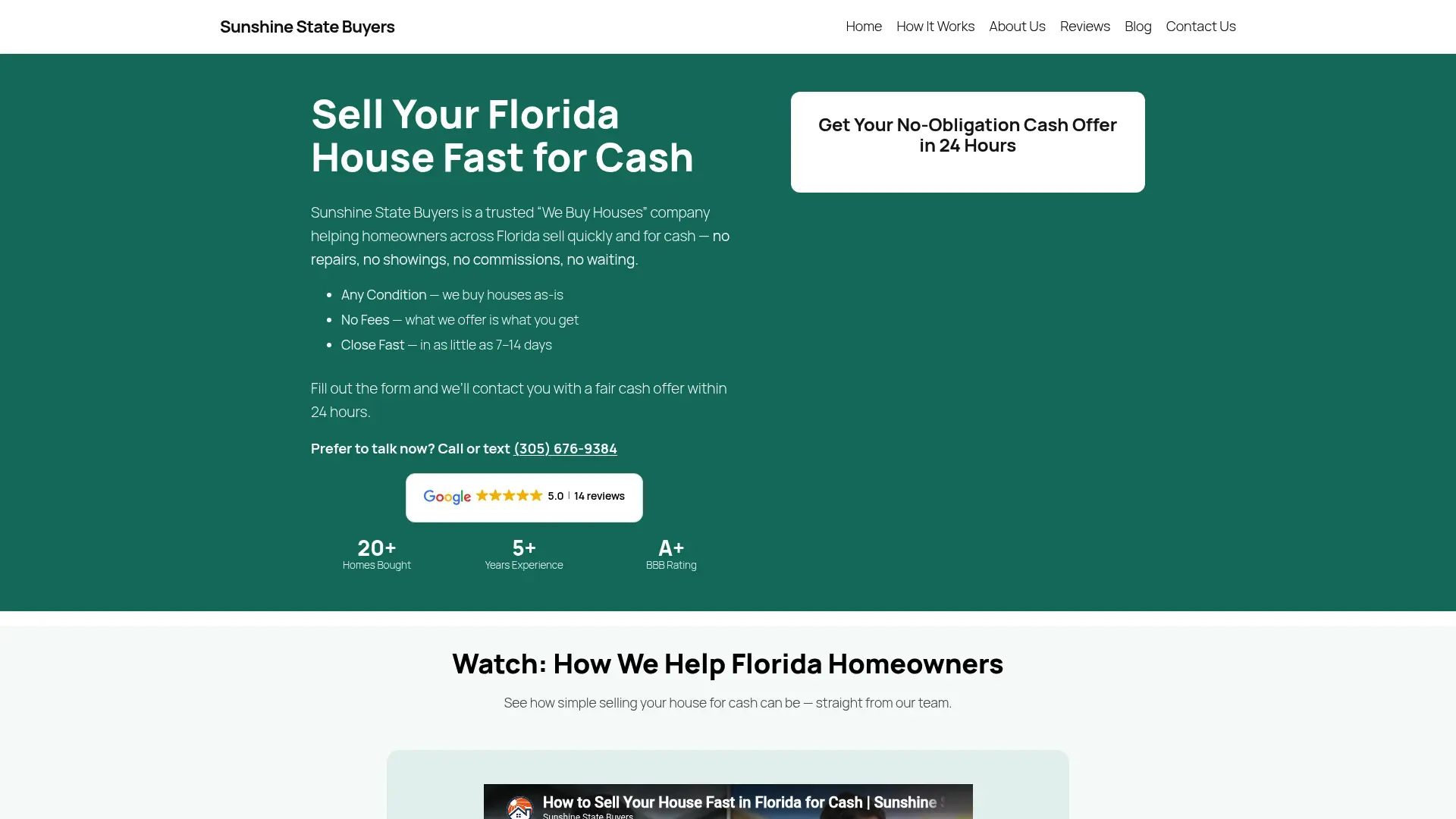
    If everything above has you doing math on commissions, title insurance, and prorated taxes, there’s a simpler path. Sunshine State Buyers is the direct alternative to listing with an agent: no commissions, no repair negotiations, and no showings, just a cash offer within 24 hours and a closing date you pick, usually in 7 to 14 days.
    Sunshine State Buyers

    This approach tends to fit best for sellers facing foreclosure, handling an inherited property, dealing with a tenant situation that’s dragging on, or simply needing to move fast without absorbing months of holding costs. Sunshine State Buyers has an A+ BBB rating and covers homes statewide, in any condition. If you’re weighing what a cash sale actually nets compared to a traditional listing, see the real numbers behind cash offers before you decide, or request your no-obligation offer directly.

    Where to Verify Your Own Numbers

    Illustration of three places to verify closing-cost figures: Florida Department of Revenue doc stamp guidance, the promulgated title insurance rate breakdown, and the Sunshine State Buyers Miami closing cost guide

    For your own calculations, check the Florida Department of Revenue’s doc stamp guidance, the promulgated title insurance rate breakdown, and, if you’re selling in Miami, Sunshine State Buyers’ local closing cost guide for market-specific detail.

    Sources

    FAQ

    How much are closing costs on a $300,000 home in Florida?

    Total seller costs typically run tens of thousands of dollars, driven mainly by commission, documentary stamp tax, and title insurance if your county custom assigns it to the seller.

    Who pays closing costs in Florida, buyer or seller?

    Both parties pay separate costs. Sellers typically cover commission, doc stamp tax, and often title insurance, while buyers cover their loan-related fees, though owner’s title insurance allocation varies by county and remains negotiable.

    What are the downsides of a seller paying closing costs?

    Paying more of the closing costs reduces your net proceeds directly, and if you’re already tight on equity, it can shrink what you walk away with after your mortgage payoff. Sellers facing that squeeze sometimes prefer a cash sale specifically to avoid commission and repair costs eating further into proceeds.

    This article was produced with AI assistance and reviewed for accuracy. It is provided for general information only and is not professional advice.

    What comes off the top, area by area

    Two costs on this list behave differently depending on where you sell. In an HOA community — most of Pembroke Pines west of I-75 — an estoppel letter and board approval stretch the timeline and the holding costs with it. In Brickell, monthly dues keep running for the roughly four months a condo now takes to go under contract.

  • Keep Earnest Money When Buyer Financing Falls Through: U.S. Guide

    Keep Earnest Money When Buyer Financing Falls Through: U.S. Guide

    When a buyer’s financing falls through, most sellers get their earnest money released to them within days if the buyer’s deadline had already passed, while buyers still inside their financing contingency window usually get a full refund. Your immediate job is simple: pull the lender’s denial letter, check your contract’s contingency dates, and decide fast whether to extend, renegotiate, relist, or explore a direct cash sale.


    TL;DR:

    • Buyers should provide clear proof of their ability to fix underwriting issues before requesting an extension, avoiding open-ended requests that leave sellers exposed.
    • Sellers need to promptly request the lender’s denial letter and verify contingency deadlines to determine whether to extend, renegotiate, relist, or pursue a cash sale.
    • If a buyer terminates within a valid contingency, they are typically entitled to a full refund of earnest money, but after expiration, the seller may keep the deposit as damages.
    • Cash buyers offer a fast, predictable alternative, often providing offers within 24 hours and closing in 7 to 14 days, which bypasses financing risks altogether.
    • Both sides can prevent future financing failures by securing full underwriting approval early, communicating financial changes immediately, and setting firm contingency deadlines.

    Table of Contents

    Why Buyer Financing Fell Through: Common Causes

    Buyer financing rarely fails for one dramatic reason. It usually comes down to underwriting catching something a pre-approval never checked. A pre-approval is a snapshot, not a guarantee. Lenders re-verify credit, income, and assets right before closing, and even small changes in that window can sink the whole deal.

    The most frequent culprits:

    • A new car loan, credit card balance, or missed payment drops the buyer’s score below the lender’s threshold.
    • The appraisal comes in under the contract price, leaving a funding gap the buyer can’t cover.
    • Title defects or property condition issues block the loan, especially with FHA, VA, or USDA financing, which carry strict minimum property standards.
    • Large bank deposits go undocumented, and the lender can’t verify where the cash-to-close funds actually came from.

    Agent survey data backs up how common this is. In a recent Redfin agent survey, a meaningful share of respondents named buyer financing falling through as a top reason deals collapsed. That’s roughly one in four failed contracts tracing back to a lender saying no at the worst possible moment.

    What Happens to Earnest Money When Financing Fails?

    Two contract clauses decide almost everything: the financing contingency and the option or inspection period. While either is active, a buyer who’s denied a loan typically has the right to terminate and get their earnest money back. Once those windows close, and the buyer hasn’t secured financing, they may be in default, and you as the seller could be entitled to keep the deposit as liquidated damages.

    Hand turning key in front door lock of Florida home

    That’s the contract theory. In practice, escrow and title companies won’t release a dime without a signed release from both parties. If buyer and seller disagree about who’s at fault, the money sits frozen while the dispute gets sorted out, sometimes for weeks, according to LegalShield’s overview of earnest money disputes.

    Outcomes generally break down three ways:

    • The buyer terminates within an active contingency and the earnest money is refunded, no dispute needed.
    • The contingency has expired, the buyer defaults, and the seller keeps the earnest money as the agreed remedy.
    • Rarely, a seller pursues specific performance, though most contracts and most courts favor monetary remedies over forcing a closing.

    Contract language varies by state, and Texas and Georgia forms in particular show how much outcomes hinge on the specific default provisions written into the option period and financing addenda. Read your contract before you assume anything.

    What Should Sellers Do When a Buyer’s Financing Falls Through?

    Move fast, but move in order. Here’s the sequence that actually protects your position:

    1. Get the denial letter. Request the lender’s written explanation for the denial, along with any communication from the buyer’s agent confirming the timeline.
    2. Check your contract status. Confirm whether the financing contingency or option period has expired, and call your real estate attorney or agent to interpret what that means for earnest money.
    3. Activate your backup plan. If you have a vetted backup offer, put it in motion. If not, relist quickly to limit days-on-market damage.
    4. Consider a short extension, cautiously. Only grant one if the buyer can show concrete proof they can fix the underwriting issue, like a co-borrower letter or a bank statement clearing up a deposit question.

    Pro Tip: Never grant an open-ended extension. A firm 7 to 14 day window with written proof of progress protects you far better than vague reassurance from the buyer’s agent.

    What Should Buyers Do When Their Financing Falls Through?

    If you’re the buyer, the clock matters more than your pride. Contact your loan officer immediately and get a written explanation of exactly which underwriting condition failed. You need that document whether you’re trying to fix the loan or walk away.

    From there:

    • Freeze your finances completely. No new credit cards, no car loans, no unexplained large deposits until you close.
    • Gather documentation for any existing funds, gift letters, bank statement trails, anything a lender might ask to re-verify.
    • Explore short-term fixes: bringing extra cash to closing, switching loan programs, or adding a co-borrower can sometimes save a deal that looked dead.
    • If termination is your only option, follow your contract’s written notice requirements exactly. Missing a deadline or using the wrong format can cost you your earnest money even when you were otherwise entitled to it.

    Pro Tip: Lenders re-check credit and employment right up until funding, sometimes even after you’ve signed closing documents. A single late payment during escrow can cause a denial that has nothing to do with your original approval, according to JVM Lending.

    What Are the Realistic Options After a Financing Failure?

    Once the immediate scramble settles, both sides need a real path forward. Four options tend to cover almost every situation:

    • Written extension. A 7 to 30 day extension gives the buyer room to fix a fixable problem, and sellers should require documented proof of progress before agreeing, per Wells Fargo’s escrow guidance.
    • Renegotiation. If the appraisal came in low, a price reduction, a buyer cash contribution, or splitting the gap can save the deal without restarting the whole process.
    • Backup buyer or fast relist. A pre-vetted backup offer lets you pivot immediately, which is why holding one is the single best risk hedge sellers have.
    • Cash sale. A direct cash buyer removes financing risk from the equation entirely. Sunshine State Buyers, for example, provides offers within 24 hours and can close in 7 to 14 days, which sidesteps the entire underwriting cycle that just cost you a deal. Reading about how cash offers compare to lowball assumptions helps sellers weigh this option honestly.

    How Can You Prevent Financing From Falling Through Again?

    Prevention beats crisis management every time. Both sides have a role here.

    For buyers: get a full underwriting pre-approval, not just a prequalification letter. Avoid new credit activity of any kind during escrow. Keep your job stable, and respond to every lender document request the same day it arrives.

    For sellers and agents: insist on solid pre-approval evidence before accepting an offer, keep a backup offer warm, and write firm contingency deadlines into the contract rather than leaving them open-ended.

    1. Confirm the buyer’s pre-approval came from full underwriting, not an automated prequalification.
    2. Set a firm calendar reminder for every contingency deadline in the contract.
    3. Require immediate written disclosure from the buyer of any job or financial change during escrow.

    Pro Tip: Many failures are entirely avoidable. Buyers who freeze their finances and communicate every change to their lender immediately, rather than after the fact, rarely see their loans denied close to closing.

    Why a Cash Buyer Sees Failed Financing Differently

    Financing collapses look different from where Sunshine State Buyers sits, because financing was never part of the equation. Sunshine State Buyers makes cash offers within 24 hours and closes in 7 to 14 days, buying homes exactly as they sit, no repairs, no lender appraisal gap, no underwriting surprise three days before closing.

    Sellers turn to this route most often when a deal just died and foreclosure risk is closing in, when a tenant situation makes traditional buyers nervous, or when a repair backlog would have doomed the appraisal anyway…

    — David

    Get a Cash Offer Instead of Waiting on Another Buyer

    If a deal just collapsed and you’re staring down another 30 to 60 days of showings, financing contingencies, and appraisal risk, waiting isn’t your only move. Sunshine State Buyers gives you a fixed cash offer within 24 hours, and you pick the closing date, often in as little as 7 to 14 days, without another lender in the mix to disappoint you again. That’s the real trade: certainty now versus another gamble on someone else’s underwriting file. This route makes the most sense when your timeline is tight, when foreclosure risk is climbing, or when your last buyer’s financing fell through and you can’t afford a second false start. See how fast a closing can actually happen and request your no-obligation offer today.

    Homeowner on phone with cash offer near Florida home

    Authoritative Resources

    For deeper reading, the CFPB’s guide to the closing process covers consumer protections around mortgage funding, and Wells Fargo’s earnest money and escrow guidance explains deposit norms in plain terms.

    Sources

    FAQ

    What Happens if a Buyer’s Financing Falls Through?

    The contract typically dictates the outcome: if the financing contingency or option period is still active, the buyer can usually terminate and recover earnest money, while an expired contingency can mean the seller keeps the deposit as the agreed remedy.

    Why Would Buyer Financing Fall Through?

    The most common causes are new debt or credit score drops caught in final underwriting, a low appraisal creating a funding gap, title or property condition issues, and undocumented deposits the buyer can’t explain to the lender’s satisfaction.

    Do I Get My Earnest Money Back if My Financing Falls Through?

    If you terminate while your financing contingency is still active and follow the contract’s written notice requirements, you’re generally entitled to a full refund of your earnest money.

    Do I Get My Down Payment Back if Financing Falls Through?

    The down payment isn’t collected until closing, so if financing collapses before then, there’s no down payment to return, only the earnest money already held in escrow is at stake.

  • Realtor Commission vs Cash Offer in Miami: What You Really Keep in 2026

    Realtor Commission vs Cash Offer in Miami: What You Really Keep in 2026

    If you are comparing realtor commission vs cash offer Miami, you are already asking the right question. The real question is not “Which option gets the highest price?” The real question is “Which option lets me keep more, with fewer headaches, on a timeline I can actually handle?”

    A lot of homeowners in Miami assume listing always wins. Sometimes it does. But once you subtract commission, repairs, credits, and months of carrying costs, the gap gets smaller than most people expect.

    On the other side, people sometimes assume a cash offer means you are giving the house away. That is also not always true. A cash offer is simply a different trade: less uncertainty and fewer steps, in exchange for not chasing a perfect retail price.

    This guide will help you compare both paths using real-world math and practical decisions, so you can choose the option that fits your life in 2026.

    If you want a simple overview of all selling routes, our Sell House Miami page lays out the options clearly. If speed is the priority, our Sell My House Fast Miami page is the best place to start. And if you want to understand the direct offer process, our We Buy Houses in Miami page explains how it works.

    Why Miami Sellers Get Confused About “Best Price”

    Miami is a huge market with every type of property: condos, rentals, inherited homes, older houses, move-in-ready homes, and full fixer-uppers across Miami-Dade County.

    The “best” method depends on your situation:

    • If your home is updated, easy to show, and you have time, listing can attract retail buyers and potentially higher offers.
    • If your home needs work, has tenant issues, is inherited, or you need speed, a cash offer can protect your time and often your real net.

    So instead of asking “What sells for more?” ask “What will I actually keep after everything?”

    That is the heart of net proceeds selling house Miami.

    What a Realtor Sale Really Costs in Miami

    When you list with an agent, the visible cost is commission. But the real costs usually include more than that.

    Here are the common costs most sellers face in a traditional sale:

    • Commission (varies by agreement, but it is usually one of the biggest costs)
    • Pre-listing prep: cleaning, paint, curb appeal, minor fixes
    • Repairs requested after inspection or credits given to the buyer
    • Closing costs on the seller side (varies by situation)
    • Holding costs while the home sits: mortgage, taxes, insurance, utilities, HOA
    • Time and stress costs: showings, scheduling, negotiations, delays

    People often search how much do Realtors charge in Miami because commission feels like the whole story. But in real life, inspections and credits are where sellers lose additional money.

    That is why many sellers end up considering sell house as is Miami options.

    What a Cash Offer Really Means

    A cash offer is usually coming from cash home buyers Miami who purchase properties as-is and handle repairs after closing.

    A real cash offer typically means:

    • No lender approval on the buyer side
    • Fewer steps and fewer delays
    • Less inspection negotiation (because the home is being bought as-is)
    • Faster, more predictable timeline
    • You do not need to renovate to sell

    The tradeoff is simple: the cash offer is usually lower than an ideal retail sale price, because the buyer is taking on repairs, risk, and the work.

    But again, the right comparison is not cash offer vs dream list price. It is cash offer vs your real net after listing costs.

    Realtor Commission vs Cash Offer Miami: A Practical Comparison

    To make this real, compare both paths using the same framework.

    Path A: Listing With a Realtor

    Your likely net is:

    Sale price
    Minus commission
    Minus repairs or credits
    Minus carrying costs during the timeline
    Minus deal risk and delays

    Listing can be a strong choice when the property is in good condition and you can wait for the best offer.

    Path B: Selling Directly for Cash

    Your likely net is:

    Cash offer
    Minus mortgage payoff or liens
    Minus any unavoidable closing items
    Plus the value of speed and no repairs

    Cash sales are often strongest when your situation demands certainty.

    When Listing Usually Wins in Miami

    Listing often makes more sense when:

    • Your home is updated and shows well
    • You can handle showings and buyer requests
    • You are not under time pressure
    • You can wait for financing, appraisal, and closing timelines
    • You want to maximize top-line price and have the patience for the process

    If your home is in a high-demand pocket like Coral Gables or a clean condo in Brickell with easy building paperwork, listing can be worth it.

    When a Cash Offer Usually Wins in Miami

    A cash offer usually makes more sense when:

    • The home needs repairs you do not want to fund
    • The property is inherited or tied to family decisions
    • You have tenants or access problems
    • The house is cluttered or needs cleanout
    • You are relocating, divorcing, or dealing with financial pressure
    • You want to avoid lender delays and appraisal risk

    This is common in real-life situations across Hialeah, Doral, Miami Gardens, and Homestead where homes may be older, rentals are common, or sellers want a clean exit.

    A cash sale is not “better.” It is simply more executable for certain situations.

    The Hidden Cost Most Miami Sellers Miss: Time

    Time is money in Miami, especially if you are paying:

    • Mortgage payments
    • Insurance
    • Property taxes
    • Utilities
    • HOA fees (condos especially in areas like Miami Beach)

    If your home sits for 2–4 months, that holding cost can erase a big chunk of the “extra” money you hoped to get from listing.

    This is why some sellers take a slightly lower cash offer and still come out ahead in real net, because they stop the monthly bleeding.

    How to Make the Decision in One Clean Step

    If you want a simple way to decide:

    1. Estimate your realistic listing price in its current condition (not your dream price).
    2. Subtract commission, expected credits, and repairs you would likely do.
    3. Add 2–3 months of holding costs (more if your home is likely to sit).
    4. Compare that net to a real cash offer.

    If the difference is small, choose the option that gives you peace and certainty. If the difference is huge, listing may be worth the effort.

    Our Sell House Miami page supports this exact comparison, and our We Buy Houses in Miami page explains what happens if you choose the direct route.

    FAQs

    How much do Realtors charge in Miami

    It depends on your agreement with the agent. The key is to look at total selling costs, not only commission, because inspections, credits, and holding costs often add up.

    Will I always make more money if I list my house

    Not always. Listing can bring a higher top-line price, but your real net depends on commission, repairs, credits, time on market, and whether the deal stays together.

    Can I sell my house as is in Miami

    Yes. You can list as-is or sell directly. Selling directly is often simpler when the home needs repairs, cleanout, or you want a faster timeline.

    Are cash home buyers in Miami legit

    Many are. The main thing is to work with a local buyer who explains the process clearly and gives you a written offer with a clear timeline.

    What is the fastest way to sell in Miami

    A direct cash sale is often fastest because it avoids buyer financing and reduces steps. The exact timeline depends on title and property details.

    Our Services at the End: How Sunshine State Buyers Helps Miami Sellers

    At Sunshine State Buyers, we help homeowners who want a clear plan, a straightforward process, and a sale that matches real life. We work with sellers who need speed, sellers who want to avoid repairs, and sellers dealing with inherited properties, tenants, clutter, or tight timelines.

    If you want to explore your options:

    Asking a different question?

    This page is about what you keep. If what you actually need to know is how fast each route closes, cash buyer vs realtor in Miami takes that question apart on its own. And if you would rather see the arithmetic run on a real property than in the abstract, several neighborhood pages work an example all the way through — Cutler Bay, North Miami and Brickell among them.

  • The Real Cost of Selling a House in Miami

    The Real Cost of Selling a House in Miami

    Most people focus on the sale price when considering the cost of selling a house in Miami. If a neighbor sold for 600,000 dollars, it is easy to assume that is the number you should aim for, too.

    The problem is that the number you see on a property website is not the number the seller actually receives. Once commissions, repairs, closing fees, holding costs, and last-minute buyer requests are taken out, the final amount can look very different.

    If you are already dealing with late payments, repairs you cannot afford, or a move that is coming up fast, knowing your true net matters more than chasing the biggest price tag. This is especially important if you are thinking about selling a house as-is, Miami option, with local buyers like Sunshine State Buyers, because you want to compare apples to apples.

    Selling a House in Miami: Cost Breakdown for Local Owners

    On paper, selling with a real estate agent sounds simple. You list, you accept an offer, and you close. In real life, the cost of selling a house in Miami is made up of several pieces that show up at different times. Some are obvious. Others surprise people at the closing table.

    Here are the main parts that most Miami sellers need to think about.

    Realtor commission in Miami

    Commission usually represents the single biggest cost. Many full-service agents in Miami charge a percentage of the final sale price and split it between the listing agent and the buyer’s agent. On a $600,000 sale, that can easily add up to tens of thousands of dollars.

    You might decide that it is worth it for the marketing and guidance you receive. Or you might prefer to put that money toward catching up on payments, moving expenses, or restarting your life somewhere else.

    Repairs and upgrades

    Very few homes are truly perfect when it is time to sell. In Miami, buyers and agents often expect:

    Fresh paint in the main living areas
    Minor repairs like patching drywall or fixing small leaks
    Updated fixtures or appliances in kitchens and bathrooms

    If the roof is older, the air conditioning is past its best days, or the property has visible damage, those items can turn into bigger repair bills or price cuts. For some owners, especially in areas like Hialeah, Miami Gardens, or Homestead, the cash simply is not there for this work.

    Closing costs for a Miami home sale

    In addition to commission and repairs, sellers usually pay:

    Title-related fees
    Owner’s title insurance in many cases
    Doc stamps on the deed
    Prorated taxes and association fees

    These numbers are not always huge on their own, but added together, they can make a noticeable dent in your check. When you work through the numbers or look at an estimate from your agent, make sure you understand each line and why it is there.

    Holding costs while you wait to sell

    While your home is on the market, you still have to pay:

    Mortgage or line of credit payments
    Property taxes
    Homeowners insurance
    Utilities, lawn care, and basic upkeep

    If the house takes three or four months to sell, that is three or four more months of carrying expenses before you even get to the closing table. These costs are easy to forget when you are comparing options, but they are very real.

    The Hidden Costs of Time and Stress in Miami

    Not all costs are financial. There is also the mental load of keeping a house show ready, arranging your life around last-minute appointments, and wondering if the buyer will actually make it to closing.

    For families with kids, pets, or elderly relatives, that constant disruption is real. For owners dealing with divorce, probate, or a job loss, the stress of an open-ended process can feel even heavier.

    This is one of the reasons some owners look for cash home buyers in Miami who can give a firm offer and a clear timeline. Even if the top line price is lower than what a perfectly renovated home might bring on the open market, the trade-off in time, certainty, and peace of mind can be worth it.

    Comparing a Traditional Sale and a Cash Sale in Miami

    To really understand the cost of selling a house in Miami, it helps to look at an example. These numbers are simplified, but they show how quickly things can change.

    Imagine a house that might sell for 500,000 dollars on the open market if it looks sharp.

    In a traditional agent sale, you might have:

    Commission and closing costs
    Repair bills before listing
    Three extra months of mortgage, insurance, and utilities
    A buyer inspection that leads to a price reduction or credit

    By the time everything is paid, your net might be closer to 430,000 dollars than 500,000 dollars. If you also spent your evenings and weekends managing repairs, showings, and stress, that cost is harder to measure but still real.

    Now imagine a direct sale house as is Miami offer from a local buyer like Sunshine State Buyers. The price might come in lower than 500,000 dollars because they are paying for repairs, closing costs, and holding costs on their side. But if you save months of payments, skip repair bills, and avoid commission, the net difference might be smaller than you first thought.

    This is why it is helpful to compare your options side by side using the guidance on the Sell House Miami page. You are not just comparing prices. You are comparing time, risk, and the amount of energy you need to spend.

    When Does a Sell House As Is Miami Option Make Sense

    A direct cash sale is not right for every homeowner. If your house is in great shape, you are not in a rush, and you are comfortable with showings and negotiations, a traditional listing might still be the best fit.

    However, a sell house as is Miami approach can make a lot of sense if:

    You are behind on payments or worried about foreclosure
    You have inherited a property you do not want to keep
    The house needs more repairs than you can afford
    You are a tired landlord dealing with difficult tenants.
    You have already moved and do not want to carry two homes

    In situations like these, getting a fair, firm offer and choosing a closing date can be more valuable than waiting months for a buyer who may or may not close.

    If you are not sure which group you fall into, you can always talk it through with a local buyer and look at the information on the We Buy Houses in Miami page. It explains how they look at properties across Miami-Dade, from Miami Beach and Coral Gables to Hialeah and Homestead.

    FAQs About the Cost of Selling a House in Miami

    Who usually pays closing costs when selling a house in Miami

    In a traditional sale, the seller usually pays a mix of title fees, doc stamps, and sometimes part of the buyer’s closing costs when the deal includes those terms. When you sell to a cash buyer, they often cover most of these costs themselves, so you should always ask exactly what the offer includes.

    How much are realtor commissions in Miami

    Commission is negotiable, but many full-service agents charge a percentage of the purchase price that is split with the buyer’s agent. On higher-priced homes in Miami, this can be one of the largest single expenses on your closing statement.

    Are repairs always required before I sell

    Not always. If you list on the open market, buyers and their lenders may require certain items to be repaired, especially major roof or safety issues. If you work with a direct buyer who focuses on as-is purchases, they may accept the property exactly as it stands, which can remove a large expense from your side.

    What other costs do sellers forget about

    Many owners forget about moving expenses, time off work for appointments, and months of extra payments while they wait to sell. These are not line items on a closing statement, but they are part of the real cost of selling a house in Miami.

    Do I still need to pay if I sell to a cash home buyer in Miami

    You should always confirm the details, but many cash buyers cover standard closing costs and do not charge traditional commissions. You are trading a higher possible top-line price for a simpler process and fewer moving parts, so make sure you understand the net amount you will receive.

    How Sunshine State Buyers Helps Miami Owners Control Their Costs

    Sunshine State Buyers is a local home-buying company that simplifies and makes the selling process more predictable for owners in Miami and across Miami-Dade County.

    Instead of asking you to fix, stage, and show your home, they buy it directly from you in as-is condition. You avoid repair bills, endless appointments, and the stress of waiting to see whether a buyer’s loan gets approved. They give you a clear cash offer, you choose your closing date, and their team handles every detail.

    They purchase houses in many neighborhoods listed on their Service Areas page, including Miami, Hialeah, Doral, Miami Gardens, Homestead, Coral Gables, and more. Whether you are dealing with an inherited house, a problem rental, or a property that simply needs too much work, their goal is to give you a straightforward way out.

    If you want to understand how a direct sale compares to listing, you can read the guide on the Sell House Miami page, then request a no-obligation offer through their simple form. Seeing a real number for your house can help you decide which path makes more sense for you, your timeline, and your peace of mind.

  • Miami Home Seller Closing Costs Explained (And How to Avoid Paying Them)

    Miami Home Seller Closing Costs Explained (And How to Avoid Paying Them)

    Selling your house in Miami? Between title fees, agent commissions, and transfer taxes, closing costs can quickly eat away at your profit—especially if you’re trying to sell fast or as-is.

    But here’s the good news: you can sell your Miami home without paying most of these costs. Let’s break down exactly what’s included, who typically pays for what, and how a local cash home buyer like Sunshine State Buyers can help you walk away with more money in your pocket.


    💸 What Are Closing Costs When Selling a House in Miami?

    Closing costs are all the fees and expenses that come with finalizing the sale of your home.

    In Miami (and throughout Florida), these typically include:

    • Title search & title insurance: Protects the buyer (and sometimes the seller) from ownership disputes.
    • Documentary stamp taxes: A state tax on the transfer of real estate.
    • Recording fees: Paid to the county to record the deed transfer.
    • Property taxes & prorations: Any unpaid taxes up to the closing date.
    • Attorney or escrow fees: Paid to the title company or attorney handling the closing.
    • Real estate agent commissions: Usually 5–6% of the sale price.

    💰 Average total closing costs for Miami home sellers: between 6% and 10% of your sale price once commissions are factored in.


    🧾 Example Breakdown: Traditional Sale vs. Cash Sale

    ExpenseTraditional Sale (Listed)Cash Sale (Sunshine State Buyers)
    Agent Commission5–6%❌ $0
    Title Fees$1,000–$2,000✅ Covered by Buyer
    Repairs/Inspections$3,000–$15,000+❌ $0 (We Buy As-Is)
    Staging & Cleaning$500–$1,500❌ $0
    Closing Costs$2,000–$4,000✅ Covered by Buyer
    Total Out-of-Pocket Costs$10,000–$25,000+$0

    ✅ With a direct cash offer from Sunshine State Buyers, you skip the agents, repairs, and most closing costs altogether.


    🕒 When Are Closing Costs Paid in Miami?

    Closing costs are usually deducted at the closing table from the seller’s proceeds. That means if you sell your home for $400,000, you might only walk away with $360,000 or less after fees.

    When you work with a Miami cash buyer, however, you get a clear, upfront offer—and what we agree on is what you take home. No surprise deductions.


    ⚖️ Who Pays Closing Costs in Miami?

    Traditionally, both parties split certain costs, but in many real-world scenarios, sellers shoulder the bulk of them.
    Here’s how it usually breaks down:

    • Seller typically pays:
      • Title insurance (owner’s policy)
      • Transfer taxes
      • Real estate commissions
      • HOA estoppel fees (if applicable)
    • Buyer typically pays:
      • Title search (lender’s policy)
      • Loan origination fees
      • Appraisal & inspection fees


    With Sunshine State Buyers, we pay for all the standard seller-side costs—including title, closing, and transfer fees—so you keep the full amount we offer.


    🧰 How to Reduce or Avoid Closing Costs

    If you’re selling through a real estate agent, you can:

    • Negotiate a lower commission rate
    • Ask the buyer to cover title insurance or escrow fees
    • Avoid unnecessary upgrades and repairs before listing

    But if you’re selling as-is for cash, you can skip these steps entirely:

    • No realtor fees
    • No closing costs
    • No repairs or cleaning needed

    Just a straightforward cash offer and a quick closing on your timeline—sometimes in as little as 7 days.


    ☀️ Why Miami Sellers Choose Sunshine State Buyers

    At Sunshine State Buyers, we make selling simple:

    • ✅ No commissions or closing costs
    • ✅ No repairs or inspections
    • ✅ Fast closings (as little as 7 days)
    • ✅ Local Miami team you can trust

    We handle everything—from paperwork to title fees—so you can move on stress-free.


    📞 Ready to See Your Net Offer?

    Prefer to skip the math and find out exactly what you’ll walk away with?

    👉 Click here to fill out the form to get your free, no-obligation cash offer

    We’ll handle the closing costs, paperwork, and title work—you just pick your closing date.

    Or call us directly at (305) 676-9384 to talk with our friendly Miami team today.


    🏁 Final Thoughts

    Closing costs in Miami can be expensive, but they don’t have to be your problem.

    If you’re selling fast, selling as-is, or just don’t want to deal with realtor commissions and fees, Sunshine State Buyers is your easiest option.

    We buy houses across Miami, Hialeah, Kendall, Homestead, Doral, and all of South Florida—and we cover all the closing costs.

Call Now For A Cash Offer