Tag: Cash Offer vs Realtor

  • Close in 7–14 Days With an Off Market House Sale

    Close in 7–14 Days With an Off Market House Sale

    An off market house sale means the home changes hands without a public MLS listing. You keep the deal private, move faster, and skip staging and showings, but you also lose broad buyer exposure and the built-in price validation a listed sale provides. Whether that trade favors you depends on your priorities, and the sections below break down exactly when it does.


    TL;DR:

    • Off-market sales historically brought a small price premium — about 1.7% on average across two decades of Dallas-Fort Worth sales — but that edge fell to roughly 0.9%, statistically indistinguishable from zero, after the Clear Cooperation Policy took effect in 2020.
    • Buyers face challenges such as limited comparable sales, appraisal issues, and increased disclosure risks in private deals.
    • The fastest off-market closings happen with direct cash offers, sometimes completing within one to two weeks, especially for seller profiles like heirs or distressed owners.
    • Sellers prioritize privacy, speed, and dealing with property issues, which explains recent increases in delistings and private sales.
    • Buyers should have proof of funds or preapproval, conduct thorough due diligence, and be prepared for a less transparent negotiation process.

    Sunshine State Buyers
    Sell Your Florida Home As-Is
    Get a cash offer within 24 hours, avoid repairs, showings, and agent commissions, and choose a closing date that suits you.

    Request a cash offer

    Table of Contents

    What Does “Off-Market” Actually Mean?

    “Off-market” gets used loosely, and that’s where confusion starts. In real estate, it generally means a property isn’t listed on the Multiple Listing Service, the shared database agents use to broadcast listings to the widest possible buyer pool. But “not on the MLS” covers several distinct situations, and they aren’t interchangeable.

    • Pocket listing: an agent markets the home privately to their own contacts, deliberately keeping it off the MLS.
    • Office exclusive: shared only within one brokerage before (or instead of) a public listing.
    • Withdrawn or delisted: the home was on the MLS, then pulled, and now shows as inactive on portals like Zillow or Realtor.com.
    • Direct private sale: the owner sells to a known buyer or investor with no agent, no MLS, no portal footprint at all.

    The National Association of Realtors’ Clear Cooperation policy complicates the pocket listing route. Under Clear Cooperation, once an agent publicly markets a home (yard sign, social post, syndicated ad), most MLS rules require it be submitted to the MLS within a short window, typically one business day. That closes the loophole where an agent quietly advertises a home to the world while calling it “off-market.” Genuinely private sales now tend to happen through direct outreach or tight personal networks, not public-facing pocket listings.

    Why Do Sellers Choose to Sell Off-Market?

    Sellers skip the public listing for reasons that have little to do with getting the highest possible number. Privacy tops the list. Someone recovering from a divorce, dealing with a public profile, or simply uncomfortable with strangers walking through their kitchen will often trade some upside for control over who sees the home and when.
    Illustration of a hand turning a key in a front-door deadbolt, with a paved walkway, lawn and palm trees visible through the open doorway

    Speed matters just as much. A seller facing a job relocation, a foreclosure deadline, or a probate timeline often can’t wait through weeks of showings and open houses. Others simply want to avoid the work: no repairs to stage around, no photographer, no lockbox, no constant scheduling.

    Certain seller profiles show up again and again in off-market deals:

    • Landlords with tenant-occupied units who don’t want showings disrupting a lease.
    • Heirs managing an inherited property through probate, where fiduciary duty requires documenting that any private sale still reflects fair value.
    • Owners of homes needing significant repairs who’d rather sell as-is than fund a renovation before listing.
    • High-net-worth or public-facing sellers who prioritize discretion.

    Market conditions push more sellers this direction too. Delistings have accelerated recently, with reporting showing sellers pulling homes off the market at the fastest pace in years as some owners test private buyers or wait out unfavorable rate environments instead of sitting exposed on the MLS with a stale listing.

    How Do Buyers Actually Find Off-Market Homes?

    Finding a home that isn’t publicly listed takes more legwork than scrolling a portal, but the methods below work in a roughly descending order of effectiveness.

    1. Build agent relationships. Top-producing agents often hear about a seller’s intent to sell before anything goes public. Register with a few well-connected agents in your target area and ask directly whether they have pocket or office-exclusive listings.
    2. Go straight to owners. Direct outreach through letters, postcards, or targeted digital ads to owners of specific properties remains one of the most reliable off-market channels. Keep the message short, state your interest plainly, and give the owner an easy way to respond.
    3. Mine public records. County tax and deed records reveal owners who’ve held a property a long time, inherited it recently, or fallen behind on taxes: strong signals of a motivated seller.
    4. Use lead-generation software. Platforms built for this, like DealMachine, automate owner lookups and outreach so you can scale beyond a handful of manual mailers.

    Pro Tip: Before you approach any owner, have proof of funds or a preapproval letter ready. Off-market sellers rarely entertain a buyer who can’t prove they can actually close, and a serious offer without that backup usually gets ignored.

    Whatever channel gets you in the door, insist on the same due diligence you’d do with an MLS purchase: a title search, a professional inspection, and a comparable-sales review, since none of that happens automatically outside the public system.

    Is It Cheaper to Buy a House Off-Market?

    Not necessarily, and the number usually quoted needs a date attached to it. A University of Georgia working paper by Darren Hayunga examined roughly 700,000 Dallas-Fort Worth sales from 2002 to 2022 and found pocket sales went for about 1.7% more on average than comparable MLS sales, with the premium reaching roughly 8% in the highest price tiers. That average is historical, though. After NAR’s Clear Cooperation Policy took effect in May 2020, the same paper measured the premium falling to about 0.9%, statistically indistinguishable from zero, which the author attributes to the one-business-day filing rule truncating the search for a premium buyer. In today’s market, expect a private sale to match a listed one on price rather than beat it.

    What that means for each side:

    • Buyers often face fewer comparable sales to justify their offer, which can complicate the appraisal if you’re financing. Limited exposure creates real friction with lenders, so budget extra time for that step and consider a larger down payment cushion.
    • Buyers also inherit more disclosure risk. Without the standardized paperwork a listing agent typically assembles, you need to ask directly about known defects, past repairs, and permit history.
    • Sellers may leave money on the table by skipping a bidding war among multiple offers, and since 2020 the off-market premium has been too small to count on as an offset.
    • Sellers gain certainty and speed in exchange, which matters more than an extra percentage point when the deadline is a foreclosure sale date or a probate court filing.

    Negotiation on an off-market deal tends to move faster and with fewer competing signals, so both sides should lean on inspection contingencies and a clear appraisal gap clause rather than assuming urgency alone will smooth things over.

    How Does an Off-Market Sale Actually Work?

    The mechanics differ from a listed sale mainly in who initiates contact and how quickly things move once both sides agree on terms.

    1. Initial contact. A buyer, agent, or investor reaches out directly, or the seller quietly signals intent to a trusted network.
    2. Property review. The buyer (or their agent) requests basic details: condition, occupancy status, any liens, and a general price range.
    3. Offer and counter. Terms get negotiated privately, often over days rather than the multi-week bidding window of a listed sale.
    4. Due diligence. Title search, inspection, and appraisal (if financed) proceed much as they would with any purchase agreement.
    5. Closing. A cash sale can close in as little as 7 to 14 days; a financed deal typically takes 30 to 45 days because of underwriting.

    Costs shift slightly compared to a traditional sale. Sellers still generally cover closing costs and, if an agent is involved on either side, a commission, though a direct sale with no agents can eliminate that expense entirely. Buyers save on nothing structural but often skip competitive bidding premiums.

    Special cases need extra documentation. A tenant-occupied sale requires the lease and any security deposit records. A probate sale needs court approval documentation and, often, an independent valuation to satisfy fiduciary requirements. A short-notice closing, common with foreclosure timelines, requires confirming payoff amounts with the lender early so nothing stalls at the closing table.

    When Should You Sell or Buy Off-Market?

    Run through this before committing either direction.

    For sellers, off-market makes sense when:

    • Privacy matters more than maximizing your buyer pool.
    • You need to close in weeks, not months.
    • The property has issues (tenants, repairs, code violations) that complicate a public listing.
    • You have, or your agent has, real access to qualified buyers already.

    For buyers, pursue a private deal when:

    • You have proof of funds or financing preapproval ready to show immediately.
    • You’re comfortable with a leaner inspection and negotiation timeline.
    • You have a solid valuation method that doesn’t depend on abundant comps.

    Walk away if a seller refuses any inspection, can’t produce clear title documentation, or pressures you to skip contingencies entirely. Those are red flags in any transaction, private or public.

    Pro Tip: If a seller can’t explain why they’re avoiding the MLS, ask directly. A reasonable answer (privacy, timeline, tenant issues) is normal. A vague or evasive one is worth walking away from.

    Publisher Perspective: When a Direct Cash Offer Beats a Private Listing

    Not every off-market situation calls for finding a private buyer through networking or direct mail. Sunshine State Buyers exists for the sellers who need the process itself simplified, not just kept quiet. That means an offer typically within a short timeframe and a closing date the seller picks, often within a couple of weeks, with no repairs, no showings, and no agent commission eating into the proceeds.

    We see this fit best with three seller profiles: homeowners racing a foreclosure deadline, heirs managing an inherited property they’d rather not renovate or list, and landlords stuck with a tenant situation that makes traditional showings impractical.

    Before accepting any cash offer, whether from Sunshine State Buyers or anyone else, verify proof of funds, review the title yourself or with an attorney, and ask how the offer number was calculated against comparable local sales.

    — David

    Get a No-Obligation Cash Offer Instead

    If the off-market route sounds appealing mainly because you want speed and fewer moving parts, a direct cash sale might solve that more completely than hunting for a private buyer yourself. They buy homes as-is, in any condition, with no repairs, no showings, and no commission taken off the top, which sets it apart from the private-network approach covered above where you still have to negotiate, market, and manage the deal yourself.
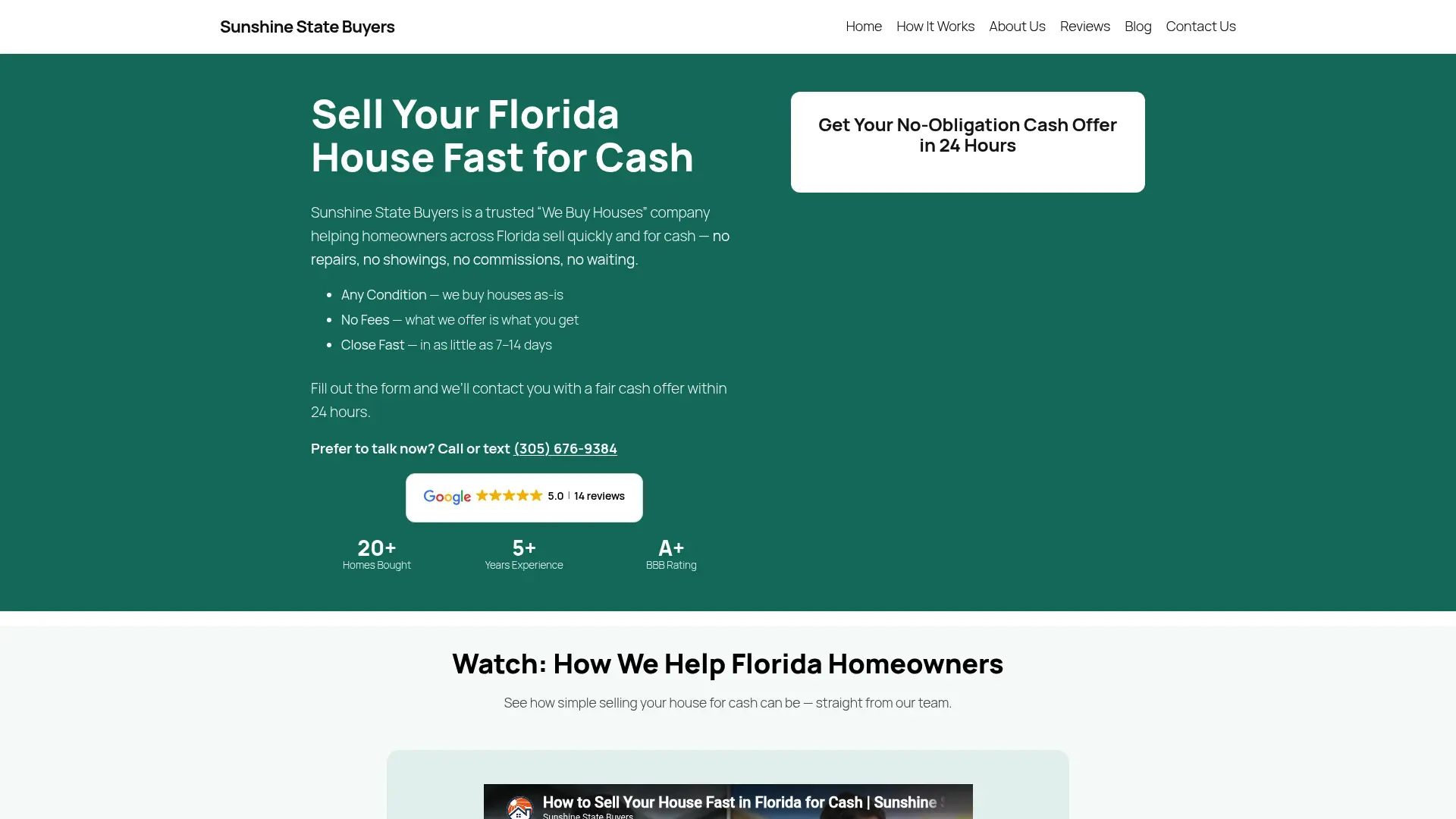
    Screenshot of the Sunshine State Buyers homepage, headlined Sell Your Florida House Fast for Cash, with a form to request a no-obligation cash offer within 24 hours

    Getting started is simple. Request an offer and Sunshine State Buyers responds within 24 hours; if you accept, you pick a closing date that works for your timeline, often in as little as a week. If you’re weighing whether a cash offer will feel fair compared to a traditional sale, this breakdown walks through how offers get calculated. You can also verify the company’s standing through third-party review sites before moving forward. Start by requesting your no-obligation cash offer today.

    This article is general information, not a substitute for advice from a qualified financial advisor. Consult a qualified financial professional about your own circumstances before acting on anything here.

    Sources

    FAQ

    Is It Cheaper to Buy a House Off-Market?

    Not typically. Research on pocket sales found sellers netted about 1.7% more on average than comparable MLS sales, so buyers shouldn’t assume a private deal means a discount.

    If a House Is “Off-Market,” Does That Mean It’s Sold?

    No. “Off-market” just means the home isn’t publicly listed on the MLS right now; it could be sold, temporarily withdrawn, or being marketed privately to a select group of buyers.

    Why Are Sellers Pulling Their Houses Off the Market?

    Many are testing a lower interest-rate environment, avoiding a stale listing, or simply changing plans, and delistings have recently hit their fastest pace in years. Others withdraw to pursue a private buyer or a direct cash sale instead.

    What Are the Cons of Off-Market Deals?

    Buyers face fewer comparable sales for appraisal purposes and less certainty about disclosures. Sellers risk missing a bidding war that could have pushed the price higher, even though the average pocket-sale outcome tends to favor them.

    How Fast Can a Cash Sale Close Compared to a Private Listing Sale?

    A cash sale through a buyer like Sunshine State Buyers can close in 7 to 14 days once you accept an offer, while a privately negotiated financed sale usually takes 30 to 45 days for underwriting.

    This article was produced with AI assistance and reviewed for accuracy. It is provided for general information only and is not professional advice.

  • 1031 Timing in Florida: Why 7–14 Day Cash Sales Break 45/180 Rules

    1031 Timing in Florida: Why 7–14 Day Cash Sales Break 45/180 Rules

    Yes, you can sell a Florida property fast for cash, and the numbers back it up. Most cash buyers respond with an offer within 24 to 48 hours of a request, and when the title is clean, closings typically wrap up in 7 to 14 days. This path fits homeowners facing foreclosure, heirs sorting out an inherited estate, landlords stuck with difficult tenants, and anyone who needs to relocate on short notice.


    TL;DR:

    • Cash offers in Florida typically range from 70% to 95% of market value, depending on property condition and urgency of the sale.
    • A 7 to 14 day closing is achievable with a clean title and immediate documentation, while delays often stem from title issues or probate.
    • Preparing documents early, using electronic signatures, and coordinating timelines can significantly reduce closing times by up to a week.
    • The 45-day identification and 180-day closing rules for 1031 exchanges require proactive planning, especially when sales close in 7 to 14 days.
    • Verifying proof of funds and the title company’s track record before signing ensures a smoother, faster transaction.

    Sunshine State Buyers
    Explore a Faster Florida Sale
    Sunshine State Buyers purchases Florida homes as-is, with cash offers within 24 hours and closing dates selected around your needs.

    Visit Sunshine State Buyers

    Table of Contents

    How Fast Is a Florida Cash Home Sale, Really?

    Not every sale moves at the same speed, and knowing which bucket your property falls into helps you set realistic expectations before you start.

    A 7 to 14 day close is the fast lane, and it’s achievable more often than sellers assume. It requires a clean title, no outstanding liens, and a seller who can produce mortgage payoff details and ownership documents right away. Cash buyers can skip the appraisal and mortgage underwriting steps that typically stall traditional sales, which is the main reason this window is realistic at all.

    14 to 21 days is the more common range for a “smooth” cash deal, and title company scheduling is usually the reason. Title searches typically take about two weeks to complete, and if the title company handling your closing has a backlog, that timeline stretches even when nothing is wrong with the property itself.

    More than a month is common when there’s a real complication. That includes:

    • Probate proceedings that haven’t cleared yet
    • Existing liens or judgments attached to the property
    • Out-of-state heirs or co-owners who need to sign remotely
    • Title defects that require a formal cure before closing

    Even in these cases, a cash buyer can still help. They just need extra lead time to coordinate signatures, verify legal standing, and resolve outstanding claims before the deed transfers.

    What Actually Happens During a Florida Cash Sale?

    The process is more linear than most sellers expect, and knowing the sequence helps you avoid surprises.

    1. Submit your property information. You’ll typically provide the address, a general description of the home’s condition, your remaining mortgage balance (if any), and any known title issues, like a lien or an open permit.
    2. Receive a written offer. Most cash buyers respond within 24 to 48 hours, often using Florida’s standard As-Is Residential Contract for Sale and Purchase. You pick the closing date; there’s no financing contingency to negotiate around.
    3. Inspection period (if included). Some contracts include a short inspection window, but As-Is deals rarely require repairs. The buyer is agreeing to purchase the home in its current condition.
    4. Title search and escrow. The title company confirms ownership, checks for liens or judgments, and prepares the closing documents. This step is where most of the timeline variability comes from.
    5. Closing. You sign the deed, the buyer wires funds, and ownership transfers. Many title companies now support remote online notarization, which matters if you live out of state or can’t make it in person.

    Pro Tip: Gather your mortgage payoff statement, property tax bill, and HOA contact information before you request an offer. Handing this over on day one instead of day ten can shave a full week off your closing.

    Cash Offer or Full Market Price? What You’re Really Trading

    Speed has a cost, and it’s worth seeing the number before you decide it’s worth it.

    Cash offers in Florida commonly land between 70% and 95% of market value, depending on the buyer, the property’s condition, and how quickly you need to close. A home in good shape with a clean title tends toward the higher end. A property with deferred maintenance, code violations, or a complicated title sits lower, because the buyer is pricing in the work and risk they’re taking on.

    What you save by skipping the traditional route:

    • No real estate agent commission.
    • No repair costs or staging expenses before showings
    • No mortgage contingency risk, meaning the deal doesn’t collapse over an appraisal gap
    • No weeks of open houses and buyer negotiations

    What you still pay, even in a cash deal, includes documentary stamp tax required under Florida law, prorated property taxes, and payoff of any existing liens.

    Quick math: on a home worth $300,000, a cash offer at 80% of value is $240,000. Skip a 6% commission ($18,000) and $8,000 in typical repairs, and your net proceeds gap versus a traditional sale narrows to roughly $34,000. For a seller facing foreclosure or juggling an out-of-state estate, that gap often buys real peace of mind.

    How to Shave Days Off Your Closing Timeline

    If speed is your top priority, a few upfront moves make a real difference.

    1. Pull your documents together first. That means a government ID, your mortgage payoff quote, the most recent property tax bill, and HOA contact information if applicable.
    2. Get ahead of title issues. Providing your payoff details and any lien information upfront lets the title company start clearing them immediately instead of discovering problems mid-process.
    3. Agree to electronic signatures. Remote online notarization is widely accepted in Florida and eliminates the scheduling back-and-forth of in-person closings.
    4. Coordinate tenant access early. If the property is occupied, confirm access windows for inspection or walkthrough before the buyer asks.
    5. Confirm your closing date availability now. Knowing exactly when you can sign avoids a last-minute delay on the buyer’s side.

    Pro Tip: If you’re managing this from out of state, tell your title company on day one. Many can prep remote signing packages in advance, which prevents a two-day delay from becoming a two-week one.

    Because title company workload is the biggest variable in most cash deals, the fastest sellers are the ones who remove every piece of friction they control before the process even starts.

    What Slows Down Florida Closings, and Who Absorbs the Risk?

    Most delays trace back to one of a few recurring problems, and each has a typical fix.

    • Title defects like old liens, unresolved judgments, or a break in the chain of ownership usually take one to three weeks to cure, depending on how far back the issue goes.
    • Probate delays are common with inherited property. If the estate hasn’t cleared probate, a cash buyer may still proceed but often needs the personal representative’s authority documented before closing.
    • Insurance and inspection problems matter more than sellers expect. A failed 4-point inspection on an older home can prevent a financed buyer from securing insurance, which stalls or kills a traditional sale entirely. Cash buyers aren’t relying on a lender’s insurance requirement, so this obstacle mostly disappears.
    • Disclosure obligations still apply. Florida law requires sellers to disclose known defects even in an As-Is sale, so title company workload aside, honesty here protects you from post-closing disputes.

    Before signing with any cash buyer, ask directly who absorbs title risk if a problem surfaces after the contract is signed.

    Why Sunshine State Buyers Can Be the Fast Option, and What to Verify First

    Sunshine State Buyers is built around the timeline sellers in a hurry actually need: written offers typically within 24 hours, and closings commonly finished in 7 to 14 days. The company holds an A+ Better Business Bureau rating, which matters in an industry where marketing promises don’t always match reality.

    Before signing with any cash buyer, including this one, ask for proof, not just promises:

    • Evidence of funds showing the buyer can actually close
    • A sample closing timeline from a recent, comparable transaction
    • The name of the title company they plan to use
    • References or a documented track record you can verify independently

    A buyer confident in their process will hand over this information without hesitation. If you’re dealing with an inherited home specifically, Sunshine State Buyers’ guidance for heirs covers the probate wrinkles that most general advice skips.

    The 45-Day and 180-Day Rules That Govern Exchange Timing

    A 1031 exchange runs on two fixed clocks, and missing either one collapses the entire tax-deferred structure. From the day your relinquished property closes, you have exactly 45 calendar days to formally identify a replacement property in writing, and 180 calendar days total to close on it. There is no flexibility built into either number, and no extension for weekends, holidays, or a slow closing.

    Florida investors face a specific timing pressure here: the state’s fast-moving cash-sale market often produces closings in 7 to 14 days, which is good news for speed but bad news for exchange planning if you haven’t lined up a replacement property strategy in advance. The 45-day clock starts the moment your sale closes, not when you decide to pursue an exchange, so a quick sale without a plan already in motion eats into your identification window fast.

    Florida’s lack of a state income tax doesn’t exempt you from the federal capital gains and depreciation recapture taxes a 1031 exchange defers, so the incentive to get the timing right is just as strong here as anywhere else. The 180-day period runs concurrently with, not after, the 45-day identification window, meaning both deadlines are counted from the same closing date on your original property.

    Where Investors Get the Timing Wrong

    The most common mistake is treating the 45-day identification period as a soft target instead of a hard deadline. Investors who wait to see how their sale proceeds before searching for a replacement property routinely run out of runway, especially in competitive Florida markets where good inventory moves quickly.

    A second frequent error involves identifying a property on paper within 45 days but failing to close within the full 180-day window because financing on the replacement property falls through. The IRS doesn’t grant leniency for a stalled loan approval; the exchange fails regardless of the reason for the delay.

    Sellers also underestimate how quickly a fast Florida cash sale can work against them. Closing your relinquished property in 7 to 14 days feels like a win, but if you haven’t already lined up qualified intermediary paperwork and started scouting replacement properties, that speed compresses your identification window rather than giving you breathing room.

    Another overlooked pitfall: naming too many replacement properties without following IRS identification rules correctly, or naming a property you can’t realistically close on within 180 days. Overreaching on the identification list, hoping one option works out, often backfires when none of them close in time.

    The fix for all of these is the same. Start replacement property research before your relinquished property even goes under contract, and build your closing timeline backward from day 180, not forward from day one.

    Illustration headed "Common timing mistakes" with two cards. Do: research replacements before listing, build the closing timeline backward from day 180, line up qualified intermediary paperwork early. Avoid: treating 45 days as a soft target, waiting to search until the sale completes, relying on unresolved replacement financing, naming too many unrealistic properties.

    Building a Timeline That Works With a Fast Florida Sale

    A fast cash sale and a compliant exchange aren’t in conflict, but they only work together with sequencing planned before you sign anything.

    Start by engaging a qualified intermediary before your relinquished property closes, not after. This is a hard requirement, not a formality, and it has to happen before you receive any sale proceeds.

    Next, begin searching for replacement properties in parallel with your sale process rather than waiting for closing day. Since a Florida cash sale can close in as few as 7 to 14 days, that compressed timeline means your 45-day identification clock starts almost immediately after you accept an offer.

    A practical sequence looks like this: identify likely replacement candidates while your sale is under contract, finalize your qualified intermediary agreement before closing, close your relinquished property, formally identify your replacement property or properties in writing within 45 days, and complete due diligence and financing on the replacement property with enough runway to close well before day 180.

    Illustration of a "Fast Florida 1031 Timeline" with five milestones: before close, engage a qualified intermediary and start searching; day 0 to 14, the cash sale closes; day 45, identify replacements; day 150, target buffer deadline; day 180, close on the replacement.

    Building in a buffer matters more than most guides admit. Financing delays, appraisal issues, or a seller backing out on your replacement property can eat weeks you don’t have if you’re already close to the deadline. Treat day 150 as your real target, not day 180, and you’ll have room to recover if something goes wrong on the replacement side.

    The Qualified Intermediary’s Role in Florida Exchanges

    A qualified intermediary is not optional. Federal tax rules require that exchange proceeds pass through this third party rather than through your own hands, and touching the money directly, even briefly, disqualifies the entire exchange.

    In Florida, qualified intermediaries typically operate through title companies, escrow firms, or dedicated exchange facilitation companies. Unlike some states, Florida doesn’t impose additional licensing requirements on intermediaries beyond federal rules, so vetting the intermediary’s track record and bonding is entirely on you as the investor.

    The intermediary’s core responsibilities include holding the sale proceeds in escrow, preparing the exchange agreement documentation, tracking your 45-day and 180-day deadlines, and disbursing funds to acquire the replacement property once you’ve identified it correctly. A competent intermediary also flags identification rule violations before they become a problem, rather than after the IRS does.

    Choosing an intermediary early, ideally before you even list the relinquished property, gives you a partner who can advise on realistic timing given how fast Florida cash sales tend to move. Waiting until after closing to find one is a common and costly mistake, since some intermediaries won’t take on an exchange that’s already past its sale date.

    What Happens if You Miss a 1031 Deadline

    Missing either the 45-day identification deadline or the 180-day closing deadline disqualifies the entire exchange, with no partial credit for having done everything else correctly. The transaction reverts to a standard taxable sale, and you owe capital gains tax and depreciation recapture on the full gain in the year the sale closed.

    There is no Florida-specific extension, waiver, or penalty relief tied to the state itself, since 1031 exchanges are governed entirely by federal tax code. The only recognized extensions come from IRS disaster relief declarations, which have occasionally applied to Florida counties after major hurricanes, giving affected investors additional time to complete pending exchanges.

    Outside of a formal disaster declaration, there’s no appeal process for a missed deadline caused by a slow closing, a financing delay, or a change of heart on a replacement property. This is precisely why building buffer time into your plan, rather than targeting day 45 and day 180 exactly, protects investors from a costly and irreversible mistake.

    Coordinating Your Sale and Purchase Without Blowing the Deadline

    The core challenge is sequencing two closings that don’t naturally want to line up. Your Florida property sale might move in 7 to 14 days, while a replacement property purchase, especially one involving financing, can take 30 days or longer to finalize.

    The most reliable approach is decoupling the search from the clock. Start touring and making offers on replacement properties while your relinquished property is still under contract, so you’re not starting your 45-day search from zero the day your sale closes. Line up financing pre-approval on the replacement side early too, since loan underwriting delays are one of the most common reasons investors blow through day 180.

    If your relinquished property sale is genuinely fast, coordinate with your qualified intermediary on exact closing dates before you sign anything, so the exchange clock starts on a day you’ve planned around rather than a day that catches you off guard.

    Ready to Request a No-Obligation Cash Offer?

    If the timing conversations above have you leaning toward speed, here’s exactly what happens next. Send Sunshine State Buyers the property address, a brief description of its condition, your remaining mortgage balance, and photos if you have them handy. That’s the full list, no lengthy application required.

    Screenshot of the Sunshine State Buyers homepage, headlined "Sell Your Florida House Fast for Cash", with a no-obligation 24-hour cash offer form.

    Most sellers hear back with a written offer within about 24 hours, and closings commonly finish in 7 to 14 days once you accept. You choose the closing date, and there’s no repair list, no showings, and no commission coming out of your proceeds. If you’re managing an inherited property from out of state or juggling a tenant situation that’s dragging on, this is the route that removes the guesswork: see how the process works from offer to closing table.

    For homeowners specifically weighing whether a cash offer is fair given today’s market, it’s worth reading what a realistic cash offer looks like before you compare numbers. When you’re ready, reach out with your property details and get your no-obligation offer started today.

    When Speed Should Beat Price

    Here’s the honest framing most articles skip: a cash sale is the right move when the cost of waiting exceeds the discount you’re accepting. If you’re facing a foreclosure deadline, an estate that needs to close before probate complications multiply, or a tenant situation draining your patience and your bank account, a 20% or even 30% discount off market value can still leave you ahead once you account for months of carrying costs, legal fees, or lost equity.

    Where I’d push back on conventional wisdom: too many sellers treat “getting full market value” as the default correct answer, when it’s really just the default slower answer. Speed has a price, but so does time.

    Whatever buyer you choose, verify their documentation before you sign anything. Ask for proof of funds and a real closing timeline from a past deal, not just a promise. If your situation calls for speed, Sunshine State Buyers is worth a direct conversation and a same-day quote.

    — David

    Sources

    FAQ

    How Fast Can You Sell a House for Cash in Florida?

    Most cash buyers provide a written offer within 24 to 48 hours, and closings on properties with a clean title commonly finish in 7 to 14 days.

    What Slows Down a Florida Cash Home Sale?

    Title defects, unresolved liens, probate on inherited property, and insurance issues on older homes are the most common reasons a closing stretches past 14 days.

    Do Cash Buyers Pay Less Than Market Value?

    Yes, typical cash offers fall between about 70% and 95% of market value, with the exact number depending on the property’s condition and how quickly you need to close.

    What Documents Do I Need to Sell My House Fast for Cash?

    You’ll generally need a government ID, your mortgage payoff statement, your most recent property tax bill, and HOA contact information if the property has an association.

    Is Sunshine State Buyers a Legitimate Cash Home Buyer in Florida?

    Sunshine State Buyers holds an A+ Better Business Bureau rating and typically provides offers within 24 hours with closings in 7 to 14 days, though you should still request evidence of funds before signing.

    This article was produced with AI assistance and reviewed for accuracy. It is provided for general information only and is not professional advice.

  • Cash Buyer vs Realtor in Miami: Which Is Faster and Why in 2026

    Cash Buyer vs Realtor in Miami: Which Is Faster and Why in 2026

    If your main goal is speed, you are asking the right question. A lot of sellers in Miami do not want a perfect process. They want a predictable closing date and a sale that does not drag on for months.

    That is why “cash buyer vs realtor Miami” is such a common comparison. It is not a debate about which method is “better.” It is a decision about which method is faster, and what you give up or gain when you choose it.

    In 2026, both paths can work. But they move at different speeds for specific reasons. Once you understand those reasons, you can choose the route that fits your timeline instead of guessing.

    If you want a full overview of selling options, our Sell House Miami page lays out the routes clearly. If you know you need speed, our Sell My House Fast Miami page aligns with that urgency. And if you want to understand how a direct cash purchase works, our We Buy Houses in Miami page explains the process step by step.

    What “Fast” Really Means in Miami

    When sellers say “fast,” they usually mean one of two things:

    Fast to get an offer
    Fast to actually close

    You can get an offer quickly in both paths. The bigger difference is closing speed, because closing speed depends on how many steps can slow a deal down.

    So if you want to sell my house fast Miami, focus less on how quickly you can list and more on what can delay closing after you accept an offer.

    Why Realtor Sales Often Take Longer

    A realtor listing can still be fast, especially for a move-in-ready home priced correctly. But traditional sales usually include more steps that can slow things down.

    Here are the most common reasons:

    Buyer Financing

    Most retail buyers use a mortgage. That means underwriting, lender conditions, and a timeline you do not control.

    Even motivated buyers can be delayed by:

    • Bank paperwork
    • Employment verification
    • Credit issues
    • Rate lock timelines
    • Lender conditions after inspection

    Appraisal

    When a buyer uses a loan, an appraisal is usually required. Appraisals can delay closings or force renegotiations if the value comes in low.

    Inspection Negotiations

    Most traditional deals include an inspection period. Even when the inspection finds normal items, the buyer often asks for repairs or credits.

    That negotiation can add days or weeks and sometimes causes the deal to fall apart.

    Showing and Access Logistics

    Before you even accept an offer, listings require showings. If you have tenants, a cluttered house, or limited access, showings become slower and more stressful.

    Deal Fallout

    This is the part many sellers do not plan for. In a traditional sale, deals can fail late because:

    • Financing falls apart
    • Appraisal is low
    • Inspection reveals an issue the buyer cannot accept
    • Buyers get cold feet after delays

    When a deal fails, you start over, and that costs time and momentum.

    So when people ask how long to sell a house in Miami, the honest answer is: it depends on how many of these steps show up.

    Why Cash Sales Are Usually Faster

    A true cash sale removes the biggest slowdowns. That is why Miami cash home buyers are often the fastest route when you need certainty.

    Cash sales are usually faster because:

    No Buyer Loan Approval

    There is no underwriting timeline. That alone removes one of the biggest reasons closings get pushed.

    No Appraisal Required by a Lender

    Cash buyers may still evaluate the property, but they are not waiting for a bank appraisal process.

    Fewer Negotiation Points

    Cash buyers who purchase as-is often negotiate less on repairs, because repairs are expected and priced in upfront.

    Cleaner Closing Timeline

    When there are fewer moving parts, you can often choose a closing date that fits your needs, assuming title is clear.

    This is why sellers who want to sell house as is Miami often lean toward cash. They do not want repairs, showings, and weeks of negotiation. They want a clean exit.

    If you want to see how a direct sale works in detail, our We Buy Houses in Miami page lays out the process clearly.

    What Can Still Slow a Cash Sale

    Cash is usually faster, but it is not magic. The most common delays in any sale, including cash, are:

    • Title issues, liens, or probate complications
    • HOA document delays for condos
    • Property access issues if the home is occupied
    • Seller paperwork delays

    The difference is that cash removes financing delays, not legal or title delays.

    If your situation involves probate or multiple heirs, closing speed depends on legal authority and agreement. If your property is a condo, HOA documents can still add time.

    That said, a direct cash buyer can often navigate these situations more smoothly because they do not rely on a lender timeline.

    Cash Buyer vs Realtor Miami: When Each Path Makes Sense

    Choose a Realtor Sale When:

    • The home is in great condition and shows well
    • You have time to list, show, and negotiate
    • You want to chase the highest retail price
    • You are comfortable with inspection and lender timelines
    • You can handle the uncertainty of possible delays

    Choose a Cash Sale When:

    • You need speed and certainty
    • The house needs repairs you do not want to do
    • The property is inherited, cluttered, tenant-occupied, or distressed
    • You want to avoid showings and long negotiations
    • You do not want to risk buyer financing failure

    In areas like Hialeah, Miami Gardens, Homestead, and many older-home pockets across Miami-Dade County, cash sales are often common because sellers want to avoid repair and access friction.

    The Net Proceeds Question: Faster Does Not Always Mean Worse

    Many sellers assume “fast” equals “less money.” Sometimes that is true. But the correct comparison is not cash offer vs dream list price.

    It is cash net vs listing net after everything.

    Listing net often includes:

    • Commission
    • Repairs and credits after inspections
    • Holding costs for months
    • Risk of delays or deal fallout

    Cash net often includes:

    • One clear offer
    • Fewer steps
    • No repair spend
    • Faster closing that reduces carrying costs

    If you want a full breakdown of what you keep in each path, our earlier Miami comparison on commission and net proceeds is supported by our Realtor Commission vs Cash Offer page, and our Sell House Miami page, which lays out the real tradeoffs clearly.

    FAQs

    Is a cash buyer always faster than a realtor sale in Miami

    Often, yes, because cash removes financing and appraisal steps. But both routes can be slowed by title issues, probate, HOA documents, or access problems.

    How long to sell a house in Miami if I list it

    It depends on condition, pricing, showings, and buyer financing. Some listings move quickly, but inspection, appraisal, and lender steps can extend timelines.

    Can I sell my house as is with a realtor

    Yes. You can list as-is, but buyers may still request inspections and credits. As-is does not always mean fewer negotiations in a traditional sale.

    What is the fastest way to sell my house fast Miami

    A direct cash sale is often fastest because it removes the buyer loan timeline and reduces steps. The exact speed depends on title and property details.

    What if my property is tenant occupied

    Tenant-occupied properties can be slower to sell through traditional listings because access is harder. Cash buyers and investor-style buyers often handle tenant situations more smoothly.

    Our Services at the End: How Sunshine State Buyers Helps Sellers Move Faster

    At Sunshine State Buyers, we help Miami-area homeowners choose the selling path that fits their situation. When speed matters, we simplify the process by making clear cash offers and purchasing homes as-is, including properties that need repairs, rentals with tenant issues, inherited homes, and distressed situations.

    If you want to explore the fastest path:

    Speed is only half the question

    The other half is what you walk away with. Realtor commission vs cash offer in Miami works through the net-proceeds side properly — commission, repair credits, and the months of carrying costs most sellers forget to count. Read both before you decide; if listing nets you more, we will say so.

  • Realtor Commission vs Cash Offer in Miami: What You Really Keep in 2026

    Realtor Commission vs Cash Offer in Miami: What You Really Keep in 2026

    If you are comparing realtor commission vs cash offer Miami, you are already asking the right question. The real question is not “Which option gets the highest price?” The real question is “Which option lets me keep more, with fewer headaches, on a timeline I can actually handle?”

    A lot of homeowners in Miami assume listing always wins. Sometimes it does. But once you subtract commission, repairs, credits, and months of carrying costs, the gap gets smaller than most people expect.

    On the other side, people sometimes assume a cash offer means you are giving the house away. That is also not always true. A cash offer is simply a different trade: less uncertainty and fewer steps, in exchange for not chasing a perfect retail price.

    This guide will help you compare both paths using real-world math and practical decisions, so you can choose the option that fits your life in 2026.

    If you want a simple overview of all selling routes, our Sell House Miami page lays out the options clearly. If speed is the priority, our Sell My House Fast Miami page is the best place to start. And if you want to understand the direct offer process, our We Buy Houses in Miami page explains how it works.

    Why Miami Sellers Get Confused About “Best Price”

    Miami is a huge market with every type of property: condos, rentals, inherited homes, older houses, move-in-ready homes, and full fixer-uppers across Miami-Dade County.

    The “best” method depends on your situation:

    • If your home is updated, easy to show, and you have time, listing can attract retail buyers and potentially higher offers.
    • If your home needs work, has tenant issues, is inherited, or you need speed, a cash offer can protect your time and often your real net.

    So instead of asking “What sells for more?” ask “What will I actually keep after everything?”

    That is the heart of net proceeds selling house Miami.

    What a Realtor Sale Really Costs in Miami

    When you list with an agent, the visible cost is commission. But the real costs usually include more than that.

    Here are the common costs most sellers face in a traditional sale:

    • Commission (varies by agreement, but it is usually one of the biggest costs)
    • Pre-listing prep: cleaning, paint, curb appeal, minor fixes
    • Repairs requested after inspection or credits given to the buyer
    • Closing costs on the seller side (varies by situation)
    • Holding costs while the home sits: mortgage, taxes, insurance, utilities, HOA
    • Time and stress costs: showings, scheduling, negotiations, delays

    People often search how much do Realtors charge in Miami because commission feels like the whole story. But in real life, inspections and credits are where sellers lose additional money.

    That is why many sellers end up considering sell house as is Miami options.

    What a Cash Offer Really Means

    A cash offer is usually coming from cash home buyers Miami who purchase properties as-is and handle repairs after closing.

    A real cash offer typically means:

    • No lender approval on the buyer side
    • Fewer steps and fewer delays
    • Less inspection negotiation (because the home is being bought as-is)
    • Faster, more predictable timeline
    • You do not need to renovate to sell

    The tradeoff is simple: the cash offer is usually lower than an ideal retail sale price, because the buyer is taking on repairs, risk, and the work.

    But again, the right comparison is not cash offer vs dream list price. It is cash offer vs your real net after listing costs.

    Realtor Commission vs Cash Offer Miami: A Practical Comparison

    To make this real, compare both paths using the same framework.

    Path A: Listing With a Realtor

    Your likely net is:

    Sale price
    Minus commission
    Minus repairs or credits
    Minus carrying costs during the timeline
    Minus deal risk and delays

    Listing can be a strong choice when the property is in good condition and you can wait for the best offer.

    Path B: Selling Directly for Cash

    Your likely net is:

    Cash offer
    Minus mortgage payoff or liens
    Minus any unavoidable closing items
    Plus the value of speed and no repairs

    Cash sales are often strongest when your situation demands certainty.

    When Listing Usually Wins in Miami

    Listing often makes more sense when:

    • Your home is updated and shows well
    • You can handle showings and buyer requests
    • You are not under time pressure
    • You can wait for financing, appraisal, and closing timelines
    • You want to maximize top-line price and have the patience for the process

    If your home is in a high-demand pocket like Coral Gables or a clean condo in Brickell with easy building paperwork, listing can be worth it.

    When a Cash Offer Usually Wins in Miami

    A cash offer usually makes more sense when:

    • The home needs repairs you do not want to fund
    • The property is inherited or tied to family decisions
    • You have tenants or access problems
    • The house is cluttered or needs cleanout
    • You are relocating, divorcing, or dealing with financial pressure
    • You want to avoid lender delays and appraisal risk

    This is common in real-life situations across Hialeah, Doral, Miami Gardens, and Homestead where homes may be older, rentals are common, or sellers want a clean exit.

    A cash sale is not “better.” It is simply more executable for certain situations.

    The Hidden Cost Most Miami Sellers Miss: Time

    Time is money in Miami, especially if you are paying:

    • Mortgage payments
    • Insurance
    • Property taxes
    • Utilities
    • HOA fees (condos especially in areas like Miami Beach)

    If your home sits for 2–4 months, that holding cost can erase a big chunk of the “extra” money you hoped to get from listing.

    This is why some sellers take a slightly lower cash offer and still come out ahead in real net, because they stop the monthly bleeding.

    How to Make the Decision in One Clean Step

    If you want a simple way to decide:

    1. Estimate your realistic listing price in its current condition (not your dream price).
    2. Subtract commission, expected credits, and repairs you would likely do.
    3. Add 2–3 months of holding costs (more if your home is likely to sit).
    4. Compare that net to a real cash offer.

    If the difference is small, choose the option that gives you peace and certainty. If the difference is huge, listing may be worth the effort.

    Our Sell House Miami page supports this exact comparison, and our We Buy Houses in Miami page explains what happens if you choose the direct route.

    FAQs

    How much do Realtors charge in Miami

    It depends on your agreement with the agent. The key is to look at total selling costs, not only commission, because inspections, credits, and holding costs often add up.

    Will I always make more money if I list my house

    Not always. Listing can bring a higher top-line price, but your real net depends on commission, repairs, credits, time on market, and whether the deal stays together.

    Can I sell my house as is in Miami

    Yes. You can list as-is or sell directly. Selling directly is often simpler when the home needs repairs, cleanout, or you want a faster timeline.

    Are cash home buyers in Miami legit

    Many are. The main thing is to work with a local buyer who explains the process clearly and gives you a written offer with a clear timeline.

    What is the fastest way to sell in Miami

    A direct cash sale is often fastest because it avoids buyer financing and reduces steps. The exact timeline depends on title and property details.

    Our Services at the End: How Sunshine State Buyers Helps Miami Sellers

    At Sunshine State Buyers, we help homeowners who want a clear plan, a straightforward process, and a sale that matches real life. We work with sellers who need speed, sellers who want to avoid repairs, and sellers dealing with inherited properties, tenants, clutter, or tight timelines.

    If you want to explore your options:

    Asking a different question?

    This page is about what you keep. If what you actually need to know is how fast each route closes, cash buyer vs realtor in Miami takes that question apart on its own. And if you would rather see the arithmetic run on a real property than in the abstract, several neighborhood pages work an example all the way through — Cutler Bay, North Miami and Brickell among them.

Call Now For A Cash Offer