An as-is cash contract in Florida lets you sell your home in its current condition, with no repairs and no agent, and if the title is clean, you can typically close in about 7 to 21 days. You skip the showings, the repair negotiations, and the risk of a buyer’s financing falling through at the last minute. That speed usually comes at a cost: cash offers tend to land below full market value, which is why this route works best for inherited homes, foreclosure situations, or properties with tenants you can’t easily remove before selling.
TL;DR:
- Most cash sales in Florida close within 7 to 21 days, depending on title clearance and document readiness, but delays often stem from liens or taxes.
- The inspection period typically ranges from 3 to 15 days, while title searches take another 7 to 14 days, frequently overlapping with the due diligence phase.
- Selling inherited, foreclosed, or tenant-occupied property involves specific legal steps, such as probate court approval or proper tenant notices, which can extend the timeline.
- Closing costs generally include the documentary stamp tax of $0.70 per $100 of sale price, along with title, recording, and prorated property taxes; these can total several thousand dollars.
- Verifying proof of funds, requesting references, and negotiating terms are essential for vetting cash buyers, with local companies like Sunshinestatebuyers offering quick, no-repair sales.
Table of Contents
- How Does an As-Is Contract Work in Florida?
- What’s the Fastest Timeline for a Florida As-Is Cash Sale?
- Can You Sell Inherited, Foreclosed, or Tenant-Occupied Property As-Is?
- What Closing Costs and Taxes Should Sellers Expect?
- How Do You Vet a Cash Buyer Before Signing?
- Sunshine State Buyers: A Local Option for a Fast, As-Is Cash Close
- Cash Sale or MLS Listing: How Should Florida Sellers Decide?
- Sources
How Does an As-Is Contract Work in Florida?
Most as-is cash deals in Florida still use the FAR/BAR “As Is” Residential Contract as their starting framework, even when no agent is involved. The form exists because it spells out, in writing, that you’re not promising to fix anything, while still giving the buyer a defined window to walk away if they find something they don’t like.
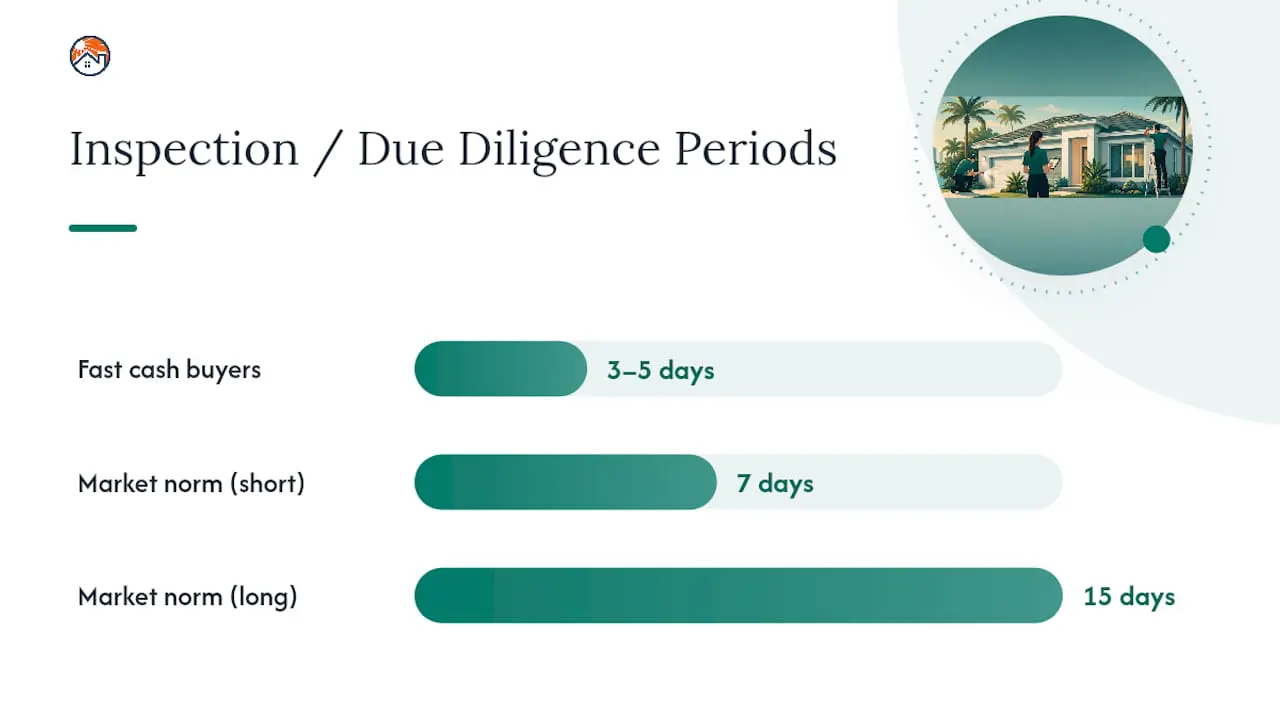
That window is the inspection or due diligence period, and it’s negotiable. Market norms put it at 7 to 15 days, though cash buyers moving fast will sometimes shrink it to 3 to 5 days if they’ve already seen photos or done a walkthrough. Shorter isn’t always better for you. It just means less time before the deal is truly locked.
Selling as-is doesn’t erase your legal disclosure duty. Florida law still requires you to disclose known material defects, things like a leaking roof, a failed septic system, or mold you’re aware of, regardless of whether the buyer plans to inspect. “As-is” describes the repair responsibility, not your honesty obligation.
Behind the scenes, a title company runs the search, issues the title commitment, and handles owner’s title insurance, and that search is usually what determines your fastest possible closing date. Having your paperwork ready speeds everything up:
- The deed from when you acquired the property
- Your current mortgage payoff statement, if any
- Recent property tax bills
- HOA or condo association documents, if applicable
Sellers dealing with damage or old code citations often assume buyers will walk. Cash buyers who specialize in sell damaged house Florida without repairs deals expect this and price around it instead.
What’s the Fastest Timeline for a Florida As-Is Cash Sale?
Speed in a cash sale isn’t really about the buyer’s decision. It’s about how clean your title is and how fast you can hand over documents. Here’s the realistic sequence:
- Request at least three offers and ask each buyer for proof of funds before you take any offer seriously. This single step creates real leverage and weeds out buyers who aren’t actually ready.
- Accept an offer and execute the contract. This locks in your price and closing date target.
- Inspection or due diligence period runs 7 to 15 days. The buyer confirms the property matches what they expected.
- Title search and commitment take another 7 to 14 days, often overlapping with the inspection window rather than starting after it.
- Closing happens at the title company, where you sign the deed and the buyer’s funds are wired in.
A well-run cash sale can close very quickly, sometimes within about a week, but most take 14 to 21 days once you account for title search timing. Liens, unpaid property taxes, and HOA estoppel letters are the usual culprits when a closing slips past three weeks.
You can head off most delays before they start. Pull your mortgage payoff figure early, request your HOA estoppel packet the same week you sign the contract (some associations take 10 business days just to produce it), and hand your title company a copy of your deed and recent tax receipts right away instead of waiting for them to ask.
Pro Tip: Call your HOA or condo association on day one of the contract, not after inspection ends. Estoppel packets are one of the most common bottlenecks, and many associations won’t rush them even for a cash deal.
Can You Sell Inherited, Foreclosed, or Tenant-Occupied Property As-Is?
These three situations account for a large share of as-is cash sales in Florida, and each carries its own legal wrinkle.
Inherited property. A personal representative generally cannot sell real estate without either explicit authorization in the will or a court order. If the estate qualifies for Summary Administration, because it’s small enough or the decedent died more than two years ago, the process moves faster. Otherwise, full probate applies. Creditor notice periods can affect when you actually receive proceeds, even though title work on the sale itself often proceeds in parallel. One practical upside: stepped-up basis usually sets your tax basis at the property’s value on the date of death, which can meaningfully reduce capital gains if you sell soon after inheriting.
- Check the deed and will language immediately; the difference between having sale authority and needing to petition the court is often the difference between weeks and months.
- A Personal Representative’s Deed conveys the property without broad warranties, so buyers lean on title insurance for protection.
Foreclosure. Timing is everything here. Notify your lender as soon as you’re considering a sale, since a cash closing needs to happen before the trustee sale date to stop foreclosure entirely. Coordinating your payoff figure with the lender early prevents last-minute surprises at closing.
Tenant-occupied property. Florida law requires proper notice to tenants regardless of a sale in progress, and existing leases typically survive the change in ownership. Cash buyers experienced with tenant-occupied homes usually close around the lease rather than requiring you to evict first.
What Closing Costs and Taxes Should Sellers Expect?
Florida charges a documentary stamp tax of $0.70 per $100 of the sale price, and sellers customarily pay it in most counties. The documentary stamp tax is calculated per $100 of the sale price.
Add title company fees, recording fees, and prorated property taxes or HOA dues, and a realistic range on a $400,000 Florida cash sale closing costs typically runs several thousand dollars, depending on the sale price and county practices.(https://pureequity.us/blog/how-to-sell-house-for-cash-florida), though county practices and negotiated terms shift that number.
- Documentary stamp tax: $0.70 per $100 of sale price
- Title search, title insurance, and title company closing fees
- Recording fees for the deed
- Prorated property taxes and HOA dues through closing day
The title problems that most often eat into your timeline and your proceeds are contractor liens, HOA super-liens, tax delinquencies, and occasionally IRS liens. Most are clearable, but only if someone finds them early enough to negotiate a payoff before closing day arrives.
How Do You Vet a Cash Buyer Before Signing?
Not every “we buy houses” offer is what it claims to be, and the contract terms are more negotiable than most sellers realize, even in an all-cash deal.
- Ask for proof of funds and the name of the title company they intend to use. A legitimate buyer answers both without hesitation.
- Request local references or examples of recent closings in your county.
- Negotiate the details that matter, including inspection period length, earnest money amount, who covers which closing costs, and your exact closing date.
- Solicit at least three offers. Cash offers commonly land 70% to 85% of after-repair value, and comparing multiple offers is the only reliable way to know you’re not leaving money on the table.
Walk away from anyone who pressures you to sign the same day, asks for a wire transfer outside of title company escrow, or refuses to name the title company they’ll use.
Pro Tip: If a buyer won’t put their offer and closing terms in writing through an escrow account at a licensed title company, treat that as a hard stop, not a negotiating point.
Sunshine State Buyers: A Local Option for a Fast, As-Is Cash Close
If everything above sounds like more coordination than you want to manage on your own, that’s exactly the gap Sunshinestatebuyers fills. As a local, family-run cash buyer, Sunshinestatebuyers gives Florida sellers a written cash offer within 24 hours and a closing date you choose, typically 7 to 14 days out, without repairs, showings, or commissions eating into your proceeds.
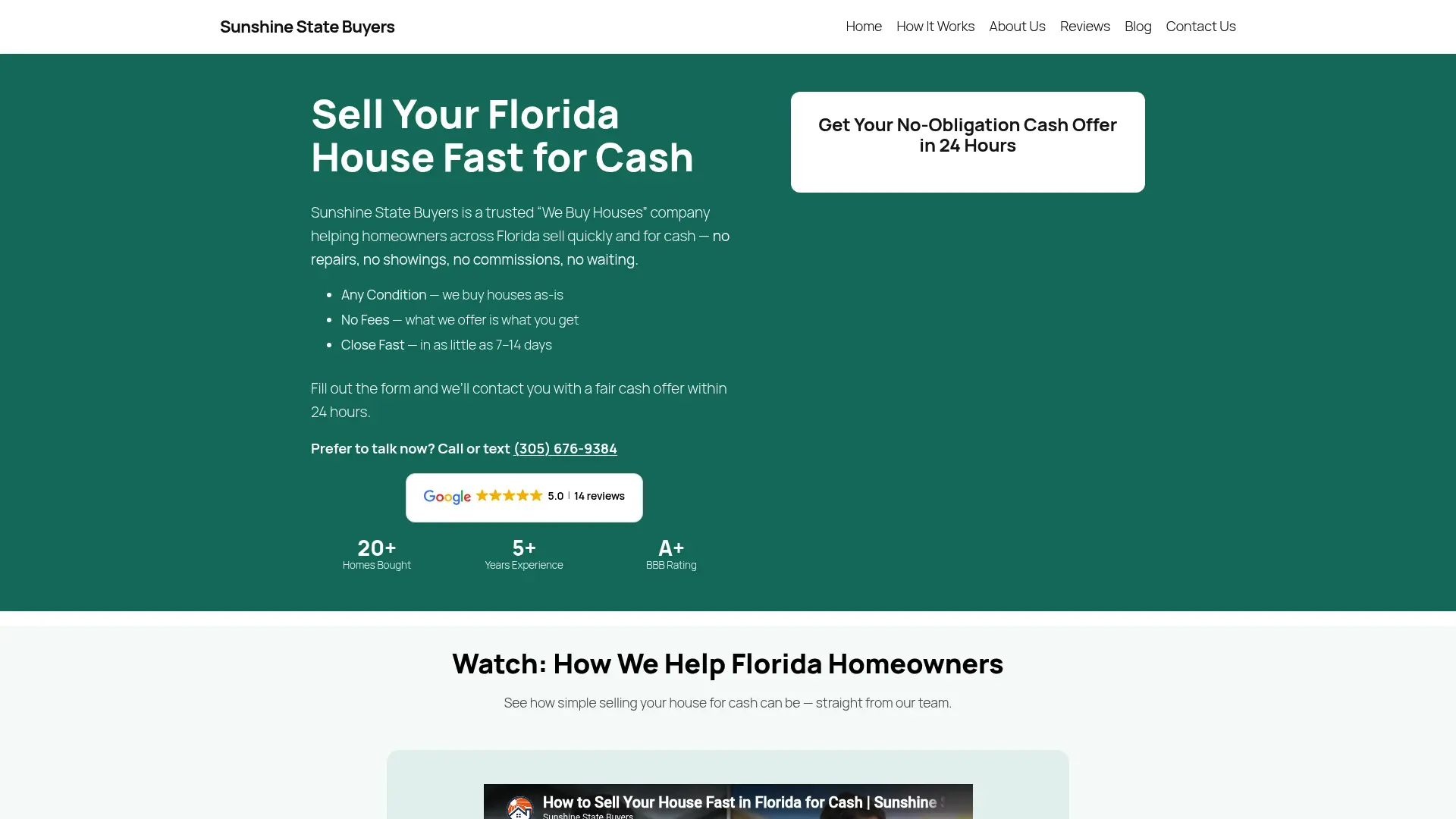
Sunshinestatebuyers carries an A+ BBB rating and works statewide, with particular depth in the situations covered above: foreclosure timelines that won’t wait, probate and inherited property, tenant-occupied rentals, and homes with code violations or damage that would scare off a traditional buyer. When you reach out, expect a straightforward process: a no-pressure written offer, closing handled through a licensed title company (not a private wire transfer), and transparent fees explained upfront rather than buried in fine print. If you’re weighing your options for a foreclosure situation specifically, the foreclosure solutions guide walks through how a cash sale can fit into that timeline. Ready to see where you stand? Get your cash offer and compare it against whatever else you’re considering, no obligation either way.
Cash Sale or MLS Listing: How Should Florida Sellers Decide?
Cash makes sense when your timeline is the constraint, not the price, foreclosure deadlines, expensive repairs you can’t front, or a probate sale that needs to close before other obligations pile up. Listing on the MLS makes more sense if you have months to spare and the cash to invest in repairs first.
Whichever path you choose, get multiple offers, verify proof of funds before you get attached to a number, and loop in a title company or probate attorney the moment liens or estate authority questions surface. Skipping that step costs far more time than it saves.
— David
Sources
Confirm figures directly: the Florida Department of Revenue’s documentary stamp tax page and probate sale rules for inherited property.
- Florida Department of Revenue — Documentary Stamp Tax
- Selling Inherited Property in Florida: Probate and Taxes – LegalClarity
- Sell House for Cash in Florida: 2026 Step-by-Step Guide | Pure Equity Realty
- Selling real estate during probate in Florida — Hallandale Law

Leave a Reply